
Last updated August 25, 2026
Free on-site gate assessment - hinges, posts, and your LiftMaster or Nice gate operator checked before anything is quoted
The assessment is free and the quote is the invoice.
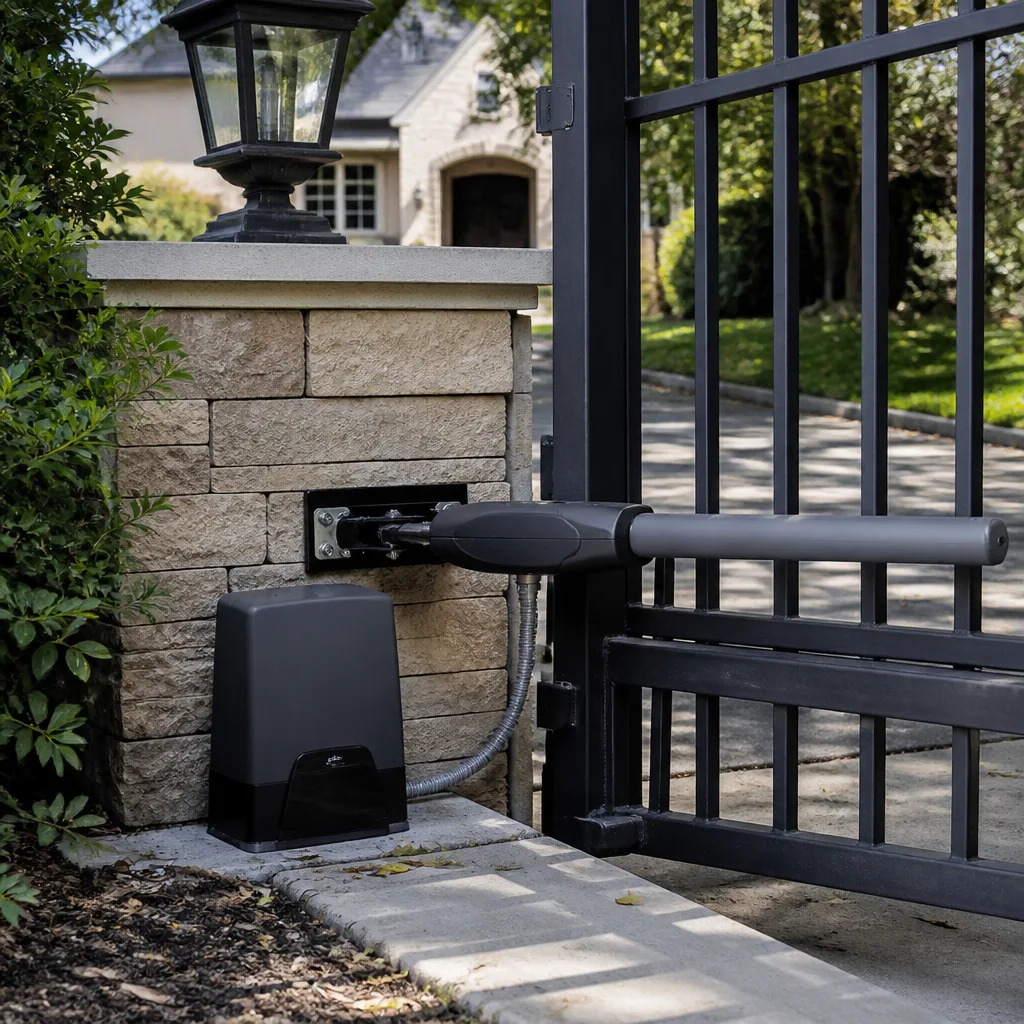
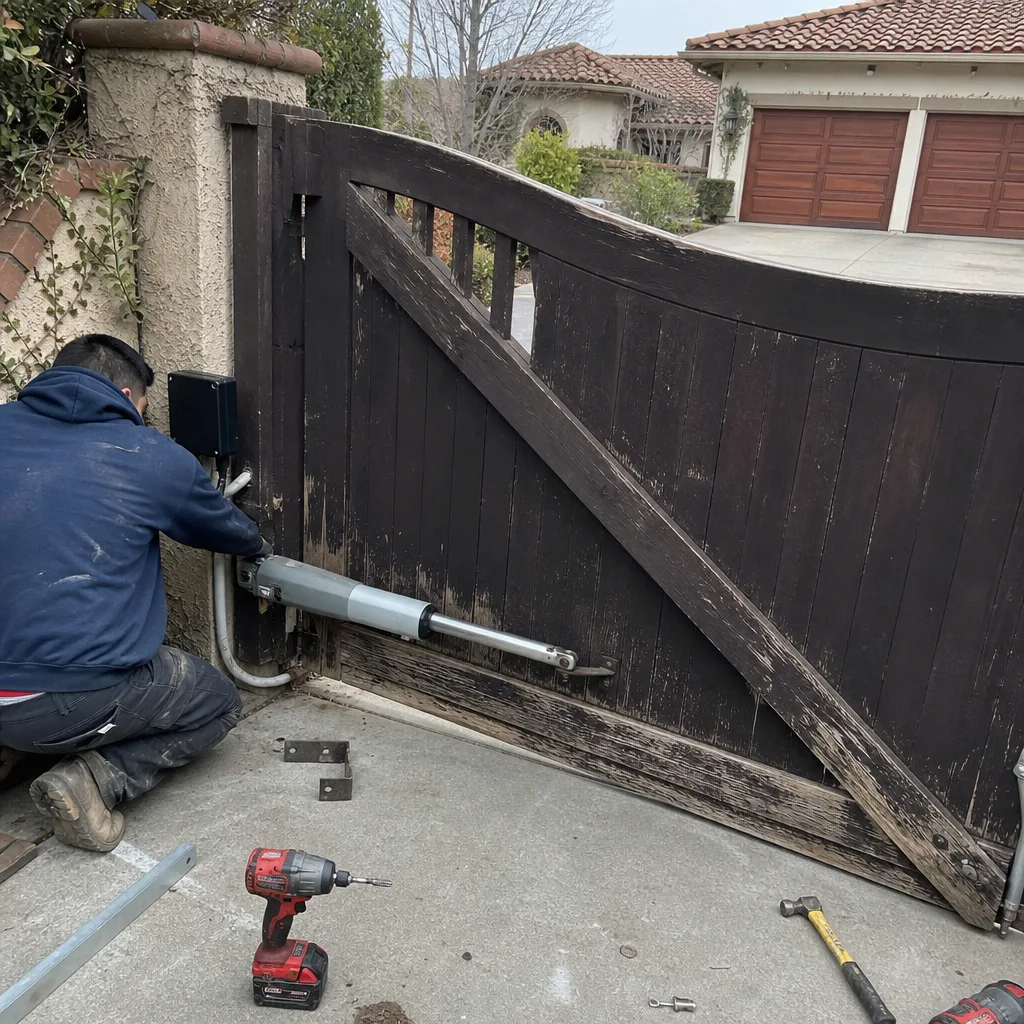 Before
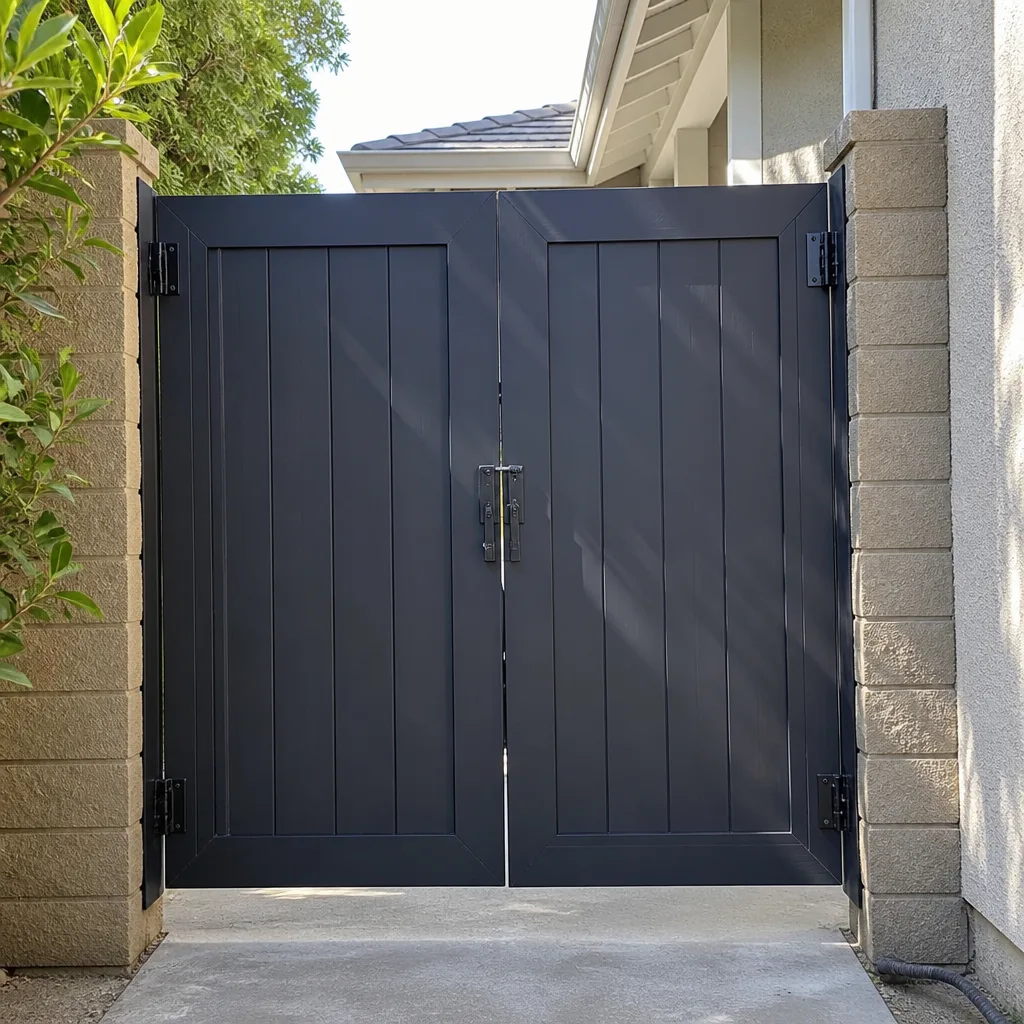 After
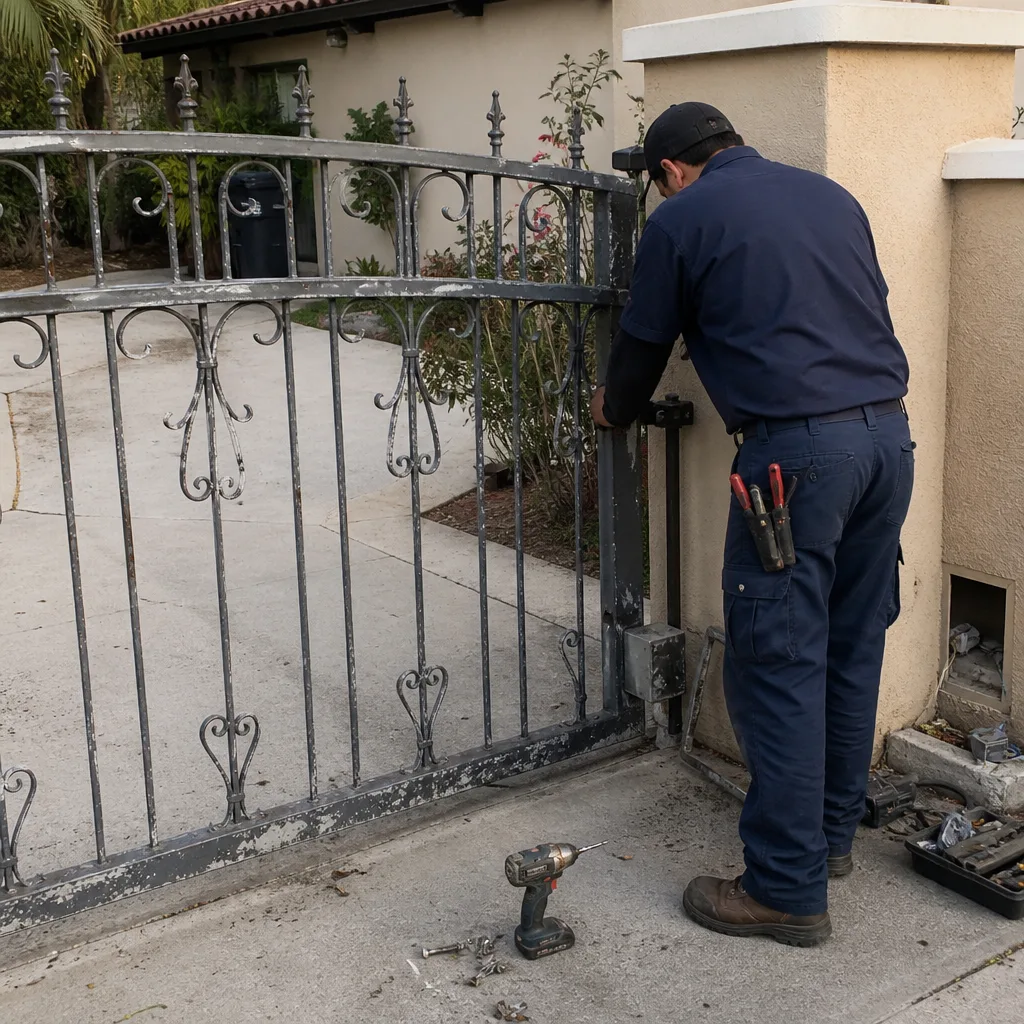 Before
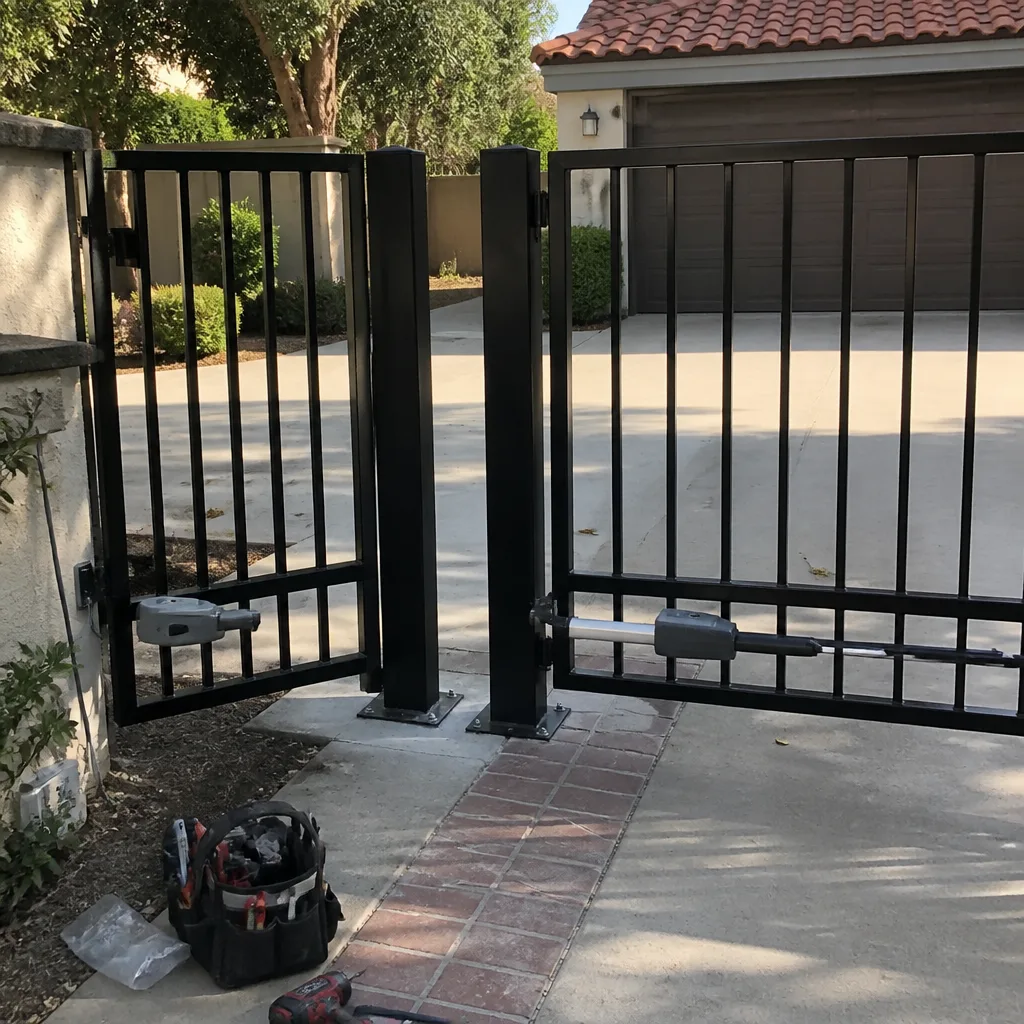 After
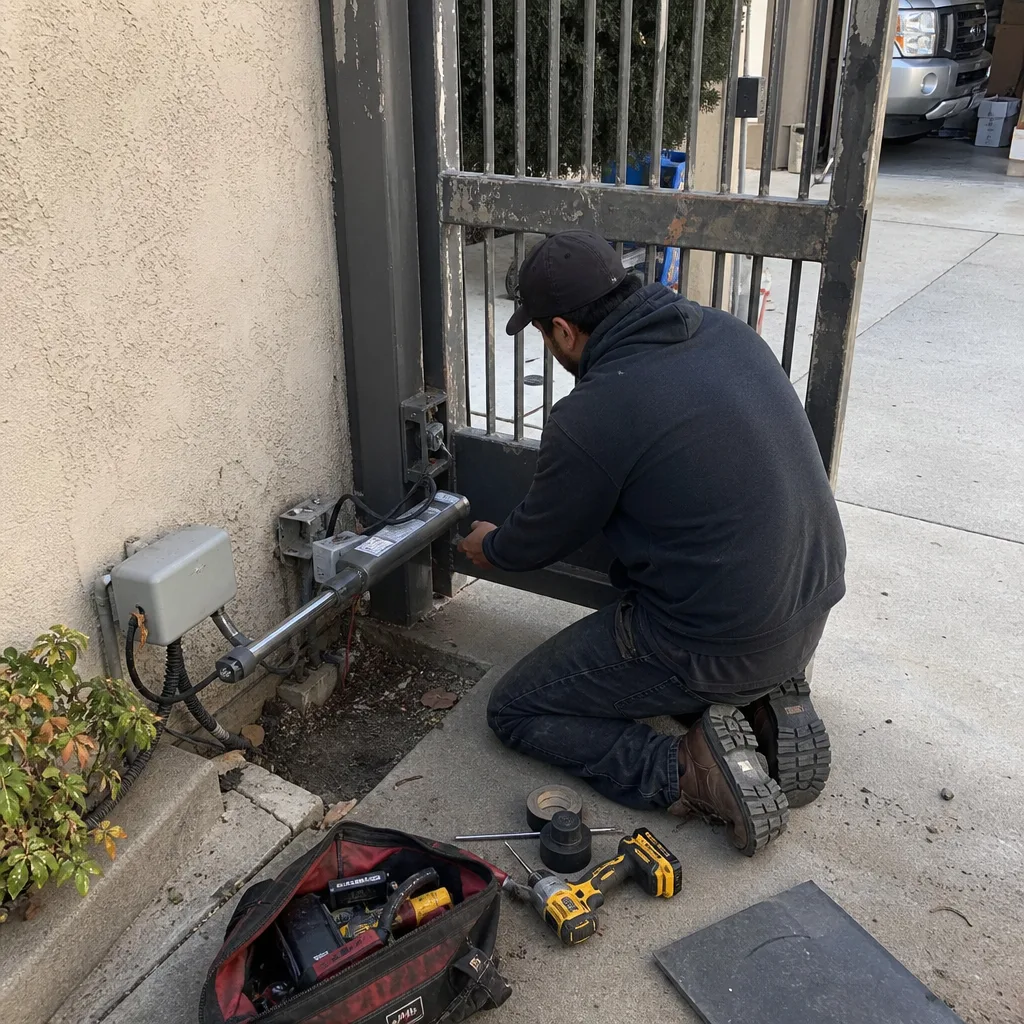 Before
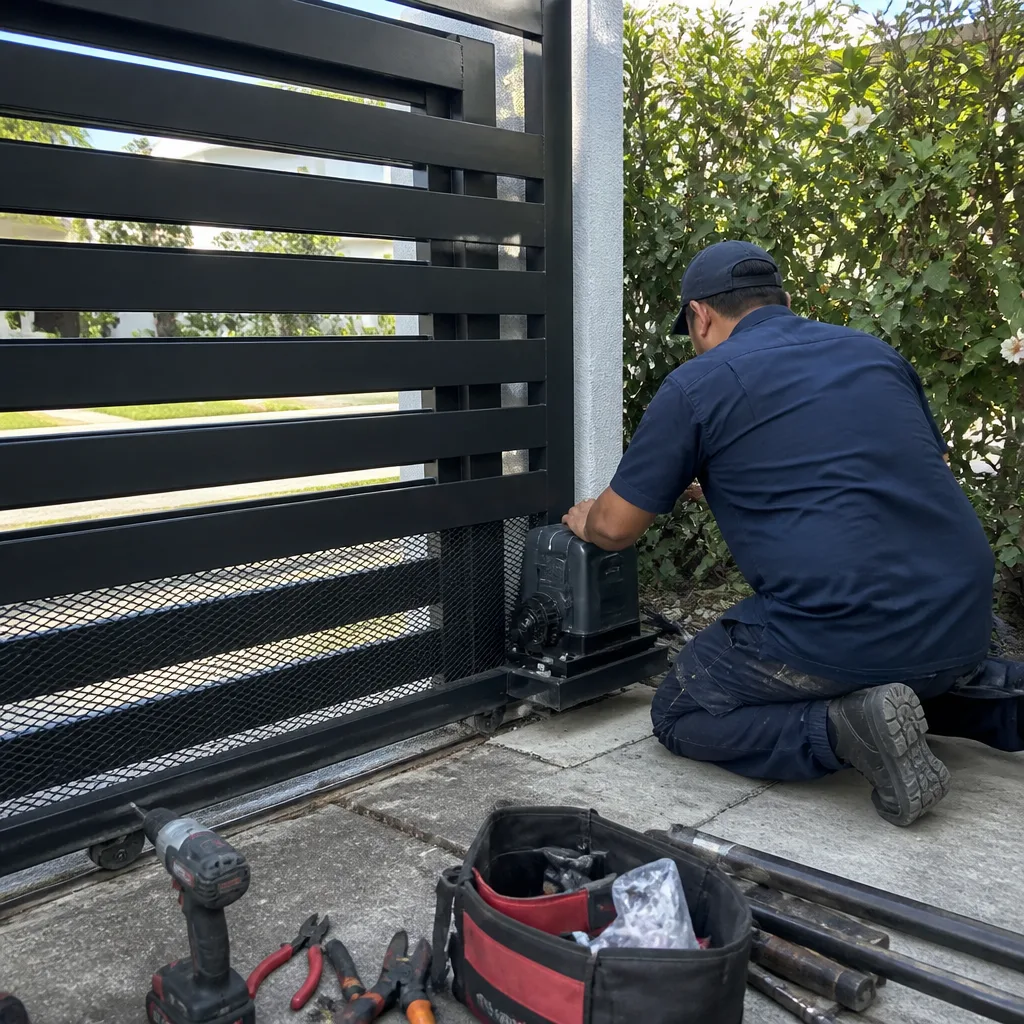 After
Gate Repair Warning Signs: A Irvine Homeowner’s Reference Guide
Most Irvine homeowners don’t think about their driveway gate until the morning it refuses to open. The truth is, gates almost never fail without warning. They telegraph trouble for weeks, sometimes months, through sounds and movements that are easy to dismiss when you’re backing out to beat the morning traffic on Culver Drive. This guide walks you through the warning signs that matter, what they mean, how urgent they are, and what a straightforward repair should cost in the Irvine market. By the time you finish, you’ll know when to act and when a gate still has years left in it.
Quick Answer
Common gate repair warning signs in Irvine include grinding or squealing noises during operation, a gate that moves slower than it used to, visible sagging or tilting, rust around hinges and welds, and an opener motor that runs but doesn’t move the gate. Most of these issues are repairable for between $165 and $480 when caught early, while ignored problems can lead to full gate replacement costing $2,800 or more. If your gate is making a new sound or moving differently than it did last month, have it looked at before a small hinge wear turns into a collapsed leaf.
Table of Contents
- Why Irvine Gates Fail Faster Than You’d Expect
- Sound Warning Signs: What Your Gate Is Telling You
- Movement Warning Signs: Sagging, Dragging, and Drifting
- Opener and Motor Warning Signs
- Rust and Corrosion: The Slow Killer
- Electrical and Sensor Warning Signs
- What Common Gate Repairs Cost in Irvine
- The Case for an $89 Seasonal Tune-Up
Why Irvine Gates Fail Faster Than You’d Expect
Irvine’s climate is hard on driveway gates, and it’s not the reason most people guess. It isn’t the heat. It’s the combination of coastal moisture, morning fog that settles over neighborhoods like Woodbridge and Turtle Rock, and the fine dust that blows in from the foothills. That moisture promotes rust on hinges, latch posts, and weld seams. The dust works its way into chain drives, bearing surfaces, and opener gears, turning what should be smooth metal-on-metal contact into a slow grinding wear pattern. We’ve pulled apart gates in Northwood that were installed less than a decade ago and found internal components that looked twenty years old.
The second factor is usage. Irvine has a high concentration of gated communities and homes where the driveway gate cycles multiple times per day, every day. A gate that opens and closes four times daily is performing over 1,400 cycles a year. That’s real mechanical work, and like any machine, it needs attention at predictable intervals. Homeowners who treat a gate like a fence and not like a machine usually learn this the expensive way.
Finally, Irvine’s housing stock includes a meaningful number of homes built in the 1980s and 1990s, when gate automation first became standard in developments like Westpark and University Park. Those original gates, and more importantly their original track systems and motors, are now reaching or passing their expected service life. The gate leaf itself, if it’s steel, may still be solid. The hardware holding it up often is not.
Sound Warning Signs: What Your Gate Is Telling You
The single most reliable early warning of gate trouble is a new sound. Gates, when healthy, run with a low, steady hum from the motor and a soft metallic slide or roll as the leaf travels. When that sound changes, something has changed physically. Here are the specific sounds we teach Irvine homeowners to listen for, and what each one means.
Grinding or Gritty Scraping
A grinding sound almost always means debris has entered the drive mechanism. On sliding gates, this is typically sand and dust in the track rollers or the chain. On swing gates, it’s usually the hinge bearings or the opener’s internal gear. Left alone, the grit acts like sandpaper, and the wear accelerates quickly. In our experience, a grinding gate in a neighborhood like Portola Springs, where the hillside dust is constant, can go from noisy to seized in under six months.
Squealing or High-Pitched Whine
A squeal is usually a lubrication failure or a worn belt. Old grease hardens, loses its film, and lets metal contact metal. The sound is annoying, but the real issue is heat and friction. A dry hinge bearing under load can score the pin and ruin the hinge, and replacing a hinge is a welding job, not a spray-lube fix.
Intermittent Clunking or Knocking
A clunk that happens at the same spot in the travel every time is the gate hitting something, or a component with play in it. It could be a wheel with a flat spot, a chain with a stretched link, or a hinge with a worn bushing. The clunk is the gate telling you exactly where the problem is, if you watch closely.
Our advice: any new sound on a gate should be checked within a week or two. Silence is not a repair, and spray lubricants from the hardware store usually wash the good grease out while leaving the grit behind.
Movement Warning Signs: Sagging, Dragging, and Drifting
Movement warning signs are often easier to spot than sounds because you’ll see them, or feel them, every time you use the gate. The important thing is to catch them before gravity wins.
Sagging Gate Leaf
A swing gate that sags drops noticeably at the free end, so that the latch no longer lines up cleanly with the catch. A sagging gate means the hinge post is shifting, the hinges themselves are wearing, or the gate was undersized for the opening. In Irvine’s clay-rich soil, which moves through wet and dry seasons, even a properly set gate post can drift over years. A sagging gate puts extra load on the opener, and an opener that has to lift a heavy, sagging leaf on every cycle burns out far sooner than one running a balanced gate.
Dragging or Scraping on the Driveway
A sliding or swing gate that drags is past the early warning stage. The damage to the bottom rail and the driveway is already happening. Dragging usually means the gate’s support wheels have failed, the track is misaligned, or the gate has twisted. If a gate drags, stop using the automatic opener and run it manually or leave it open until it’s fixed. An opener straining against a dragging gate can destroy its own gearbox in a matter of days.
Drifting or Not Staying Put
An automatic gate should hold its position when it stops. If it drifts backward after closing, or the wind pushes it off the stop, the opener’s limit settings are off, or the gearbox is worn. A gate that drifts is a security issue as much as a mechanical one. It’s also a sign that the opener is nearing the end of its service life.
A Gate That Moves Slower Than It Used To
Gradual slowing is easy to miss because it happens over months. If you find yourself waiting longer at the bottom of the drive than you used to, the gate has slowed. Causes include low hydraulic fluid (on hydraulic openers), worn capacitors on electromechanical drives, a tired motor, a misaligned track adding friction, or a gate that has gained weight from rust and debris inside the frame. A slow gate isn’t a personality quirk. It’s a declining machine.
Opener and Motor Warning Signs
The opener is the most expensive component on most automatic gates, and it gives unmistakable warnings when it’s in trouble. The difficulty is that warning signs are spread out over weeks, and they’re easy to explain away.
Motor Runs, Gate Doesn’t Move
This is the classic. You press the remote, the motor hums or whirs, and the gate sits still. On a chain-drive opener, the chain has likely slipped off a sprocket or stretched beyond the tensioner’s range. On a screw-drive opener, the internal gears may be stripped. On a hydraulic system, the pump may be running without building pressure, which usually means a fluid leak or a failed seal. None of these are fixed by pressing the remote again.
Opener Starts, Stops, Then Reverses
An opener that starts the gate moving and then stops or reverses is usually tripping its obstruction sensor. The sensor may be doing its job because there’s a mechanical bind somewhere in the travel, or the sensor itself may be misaligned or dirty. Obstruction sensors on brands like FAAC and BFT are sensitive by design, and they’ll false-trip if the gate’s movement is rough. The sensor is not the problem. It is reporting the problem.
Burning Smell or Overheating
A hot motor smell is the final warning before failure. An opener that’s working against a binding gate pulls more current than it was designed for, and the windings heat up. Once the insulation on the motor windings breaks down, the motor is done. If you ever smell hot electrical or burning plastic at the gate opener, cut power to the unit and leave it off until it’s inspected.
Safety note: gate opener motors are connected to line voltage and contain capacitors that can hold a charge even after the unit is unplugged. We do not recommend opening the motor housing yourself. A trained technician can diagnose an opener safely and usually in a single visit. Our team is factory-trained on LiftMaster, FAAC, BFT, Linear, Viking, Ghost Controls, DoorKing, Elite, and Mighty Mule, so we carry the correct parts and know the correct test procedures for the opener on your driveway.
Rust and Corrosion: The Slow Killer
Rust is a warning sign that doesn’t announce itself with noise or motion. It appears quietly, usually at welds, at the bottom rail of a sliding gate, at the hinge barrels of a swing gate, and anywhere the factory paint or powder coat has been chipped by stones or repeated contact. Once rust takes hold, it works inward, thinning the steel from the inside of the tube where you can’t see it.
In Irvine, the rust clock runs faster near the coast than it does inland. Homes in the southern parts of the city, closer to the 405 and the coastal marine layer, see more condensation and more salt in the air. Homes up against the foothills see more dust and less moisture, but the dust works into pivot points and creates its own kind of abrasion. Either way, a gate that shows rust blooms on the outside has almost certainly been rusting internally for longer.
Here’s what to look for, in order of severity:
- Surface rust at seams and welds: cosmetic now, structural later. Sand, prime, and repaint within a season.
- Pitting on the bottom rail: moisture has settled inside the frame. Drain holes may be blocked. The rail is thinning.
- Rust bleeding from bolt holes or hinge brackets: the fasteners are corroding, and the surrounding steel is weakening.
- Flaking or layering rust that sheds when touched: significant metal loss has already happened. The affected section may need to be cut out and replaced by a welder.
Rust on a gate is never “just surface rust” if the gate is over ten years old. The best time to address it is before it flakes. The second best time is now. As a welding shop as well as a gate repair company, we handle rust remediation at the metal level, cutting out compromised sections and welding in new steel before re-coating.
Electrical and Sensor Warning Signs
Gate automation is a marriage of mechanical and electrical systems, and the electrical side has its own warning signs. These are the ones Irvine homeowners mention most often when they call us, in part because they’re hard to ignore. A gate that opens but won’t close, or that only responds from three feet away, becomes a daily frustration immediately.
Intermittent Remote Range
If the remote only works when you’re close, or only when the car is angled a certain way, the antenna on the receiver may be damaged or poorly routed, the remote battery is weak, or there’s new RF interference in the area. Irvine has dense Wi-Fi coverage in every neighborhood, and new neighbors’ mesh networks can occasionally impact older 315MHz and 390MHz gate receivers. The simple fixes are a fresh remote battery and checking the antenna. The more involved fix, when it’s needed, is replacing the receiver with a modern unit.
Keypad or Intercom Works Sometimes
An inconsistent keypad is usually a wiring issue, a corroded contact, or a failing control board. It is rarely the keypad itself. When a keypad works in the morning but not in the afternoon, heat-related expansion is often to blame, which points to a connection pulling apart inside the housing. This is a safety-relevant repair, because a gate that won’t open from the outside is a security problem, and a gate that opens on its own is worse.
Gate Opens or Closes on Its Own
A gate that starts moving with no input from anyone is a serious safety issue. The cause is almost always a failing control board, a shorted photo-eye circuit, or a stuck relay. Any ghost-activation should be treated as urgent. Disconnect power to the opener and use the manual release until the board can be inspected. This is not a symptom to schedule around.
Photo Eyes Blocked or Misaligned
The photo-eye sensors at the base of the gate, usually mounted a few inches off the ground on each side of the opening, are the primary safety device on any automatic gate. They’re also easy to knock out of alignment with a wheelbarrow, a trash bin, or a car tire. If your gate closes but then immediately reverses, check for dirt on the lens and for visible misalignment. This is a homeowner-level check. If the sensors are clean and aligned and the gate still won’t close, the wiring may be the culprit.
What Common Gate Repairs Cost in Irvine
We believe in straight answers, including straight answers about money. Here’s what typical gate repairs cost in the Irvine market as of 2026. These are ranges, not quotes, because every gate is different. What’s listed is what we see across neighborhoods from Woodbury to Quail Hill.
| Repair | Typical Irvine Cost Range | Notes |
|---|---|---|
| Hinge replacement (single gate leaf) | $185-$420 | Includes welding if needed, removal of old hardware |
| Gate wheel/roller replacement (sliding gate) | $240-$520 | Depends on number of wheels and track condition |
| Chain or belt replacement on opener | $160-$350 | Less if only tensioning is required |
| Opener gearbox rebuild | $220-$480 | Common on Viking and Linear in-ground units |
| Control board replacement | $260-$610 | Varies by brand; FAAC and BFT boards run higher |
| Photo-eye sensor replacement | $140-$240 | Includes alignment and testing |
| Full opener motor replacement | $720-$1,500 | Installed, wired, programmed, and tested |
| Field weld repair (cut and patch rusted section) | $180-$380 per section | Steel cost, weld time, grinding, and paint included |
| Full gate replacement (standard single-leaf steel) | $2,400-$5,000+ | Custom sizes, designs, and teak or aluminum run more |
Every Ironworks Gate Co. job is quoted and approved before any work starts. You’ll know the exact price before we turn a single bolt. That’s the square deal we’ve operated on since the beginning, and it’s the only way we’d want our own homes handled. We also offer a $50 repair discount on any job over $250, a free second opinion on any written estimate from another company, and a permanent 5% discount for seniors and veterans. If you’ve been given an estimate that feels high or a diagnosis that doesn’t sit right, bring it to us. We’ll look.
The Case for an $89 Seasonal Tune-Up
One of the least expensive things you can do for a gate in Irvine is also one of the most effective. Our $89 Seasonal Tune-Up is a once-a-year service that most homeowners schedule before the rainy season, when gate failures spike. It’s a straightforward inspection and adjustment visit, and it catches the warning signs in this guide before they turn into repair bills.
Here’s what the tune-up includes, step by step:
- Visual inspection of the gate leaf, hinges, welds, track, and roller wheels for wear, cracks, and rust.
- Lubrication of hinge points, chain drive, bearings, and guide rollers with the proper grade of grease, not a spray-on shortcut.
- Track and gap check to confirm the gate sits square and travels freely without dragging.
- Opener force test to verify the motor isn’t working too hard against a binding gate.
- Safety sensor test on the photo eyes to confirm the gate reverses under obstruction as required.
- Limit switch adjustment so the gate opens fully and closes against its stops without slamming.
- Hardware tightening on all accessible bolts, brackets, and mounts.
- Written report explaining anything we found, what it means, and what it costs to address, if anything.
The goal of the tune-up is not to sell you more work. It’s to keep a well-built gate running long past the age that most people expect to replace one. In our experience, a gate that gets serviced annually routinely lasts 15 to 20 years or more, while a gate that’s never touched can need major work at year 8 or 10. The $89 is cheap insurance against a $900 opener strain failure.
Common Mistakes to Avoid
- Greasing a noisy gate without cleaning it first. Adding new grease over old, grit-loaded grease just makes a better abrasive paste. The surfaces have to be cleaned before they’re lubricated.
- Ignoring a sagging gate because it still opens. Every cycle a sagging gate runs puts a compounding load on the opener. By the time it stops opening, the repair involves the gate, the hinges, and the motor.
- Using a pressure washer on gate hinges and electrical housings. High-pressure water forces its way past seals, into bearings, and into junction boxes. A garden hose and a soft brush are safer, or better yet, leave the washing to the body shop.
- Buying a bigger opener to fix a hard-moving gate. If the gate doesn’t move freely by hand, it won’t move freely under power, and a bigger motor just breaks the hardware sooner instead of the motor. Fix the mechanical problem first.
- Replacing the whole gate when the hinges fail. Good steel lasts decades. A hinge is a sacrificial part. Unless the gate frame itself is rusted through, a weld repair and new hardware are a fraction of replacement cost.
- Calling a generalist handyman for an automation problem. Gate openers on brands like BFT and Viking require brand-specific diagnostics and parts. A general repair person working from a guess usually leaves the gate working worse than they found it.
- Waiting until the gate fully fails to make the call. The difference between a $220 chain tension and a $900 opener replacement is often just a few weeks. Gates don’t heal. They get worse.
When to Call a Professional
Most gate repairs are not weekend projects. The gate is heavy, the opener runs on line voltage, and the safety sensors exist because automatic gates have injured people. If your gate is sagging, dragging, making a new sound, or activating on its own, a trained professional should look at it. That’s not a sales pitch. It’s the difference between a controlled repair and an emergency. Ironworks Gate Co. offers free estimates in Irvine, and a live person answers the phone 24 hours a day, seven days a week. Call (213) 566-7552 and tell us what your gate is doing. We’ll help you decide over the phone whether it’s urgent or can wait, and we’ll schedule at a time that works for you.
Frequently Asked Questions
A gate needs repair when the leaf is structurally sound but the hardware, wheels, hinges, or opener are failing. A gate needs replacement when the steel frame itself is rusted through, cracked at the main welds, or twisted beyond alignment. In Irvine, most gates we see need repair, not replacement, especially when they’ve been maintained. A good steel gate can last 20 years or more.
A grinding noise usually means dirt and debris have gotten into the track rollers, chain, or hinge bearings. The grit wears the moving parts quickly, so it’s best to have the gate cleaned and lubricated right away. If you catch it early, the fix is often just a service visit. Call us at (213) 566-7552 and we’ll tell you what we think over the phone.
Most common gate repairs in Irvine fall between $165 and $480, with full opener replacements ranging from $720 to $1,500. The exact price depends on the gate type, the opener brand, and what’s worn. We quote every job before work begins, so you’ll never face a surprise on the invoice.
In most cases, yes. We keep a full stock of common parts for LiftMaster, FAAC, BFT, Linear, Viking, Ghost Controls, DoorKing, Elite, and Mighty Mule on hand, which lets us complete most repairs in a single visit. The best way to find out is to call us at (213) 566-7552 and describe the problem. We’ll give you a straight answer about timing.
We service nine major gate-automation brands: LiftMaster, FAAC, BFT, Linear, Viking, Ghost Controls, DoorKing, Elite, and Mighty Mule. If your opener is one of those, we have the training, the diagnostic tools, and most of the common repair parts with us on the first visit. If it’s something else, call anyway. We’ll tell you honestly whether we can help.
Yes. Most of the gate failures we see in Irvine were visible as small, inexpensive issues months before they became breakdowns. An annual tune-up catches sagging hinges, dry bearings, and binding tracks before they destroy openers and gate frames. At $89, it’s the lowest-cost protection a gate can get. Call (213) 566-7552 to schedule one before the rainy season.
The Bottom Line
Your gate talks. It talks through sounds, through movement, through rust, and through little electrical quirks that are easy to ignore until the morning it won’t open and you’re late for work. None of the warning signs in this guide mean you need a new gate today. Most mean you need a repair that costs a few hundred dollars, not a few thousand. The difference between an $89 tune-up and a $900 opener replacement is usually just attention. Pay attention, and act early. Ironworks Gate Co. home is here when you need us, and we’ll give you a straight answer and a fair price before we ever touch the gate. Call (213) 566-7552 for a free estimate, anytime, day or night.
Written by the team at Ironworks Gate Co.