
Last updated August 25, 2026
Free on-site gate assessment - hinges, posts, and your LiftMaster or Nice gate operator checked before anything is quoted
The assessment is free and the quote is the invoice.

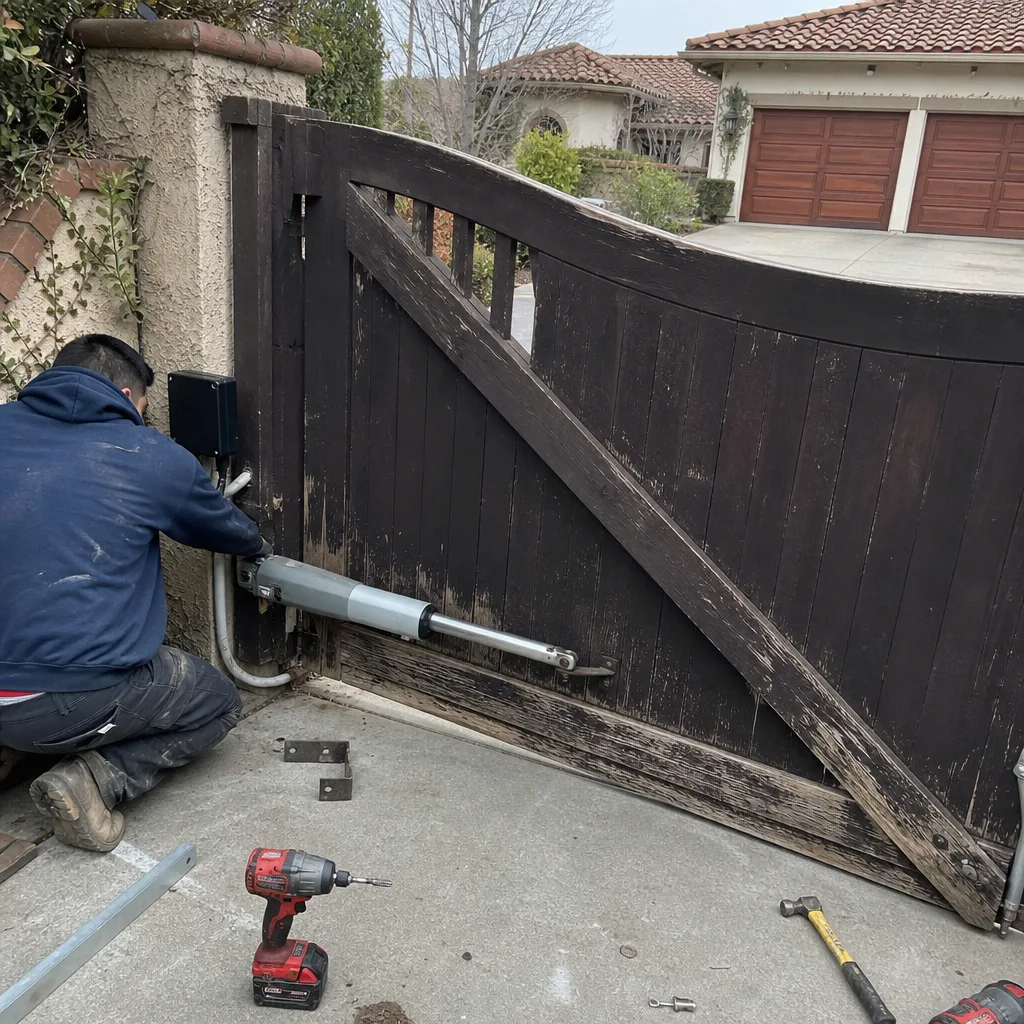 Before
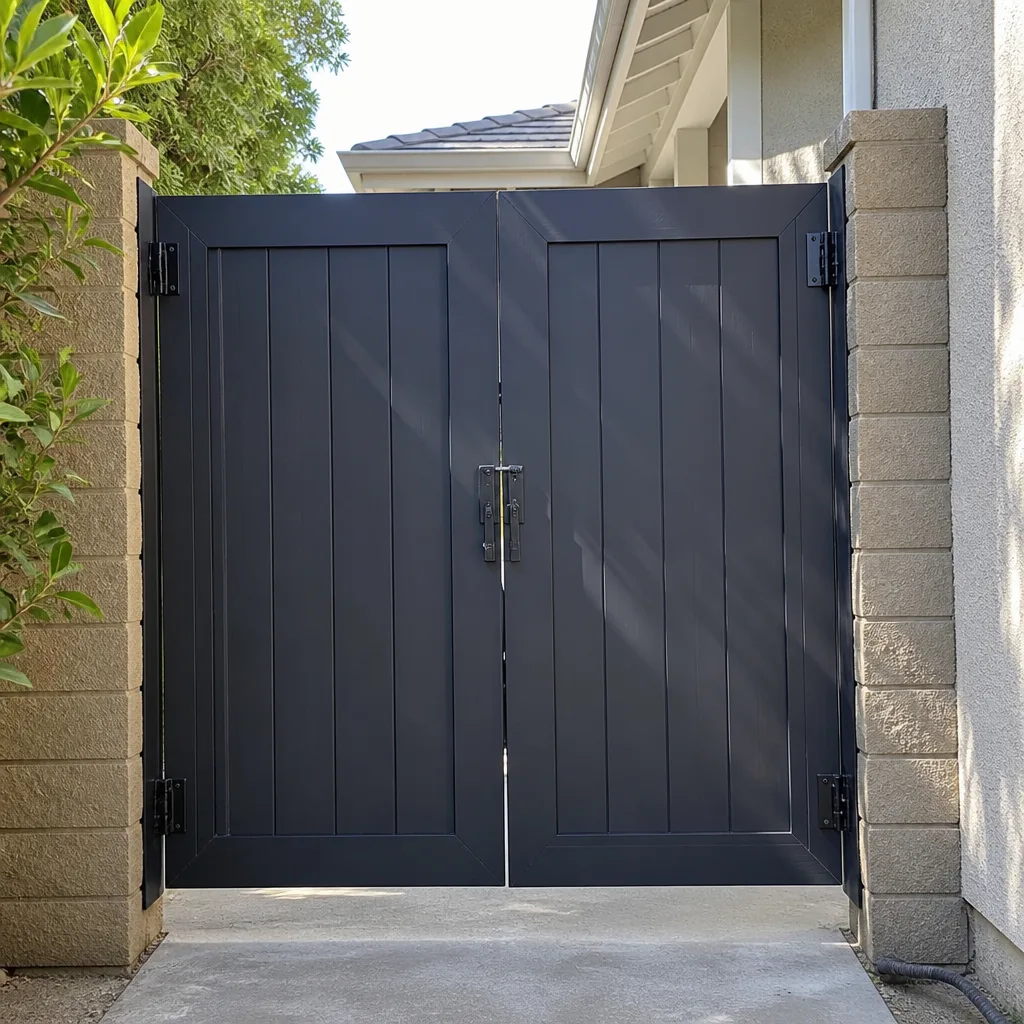 After
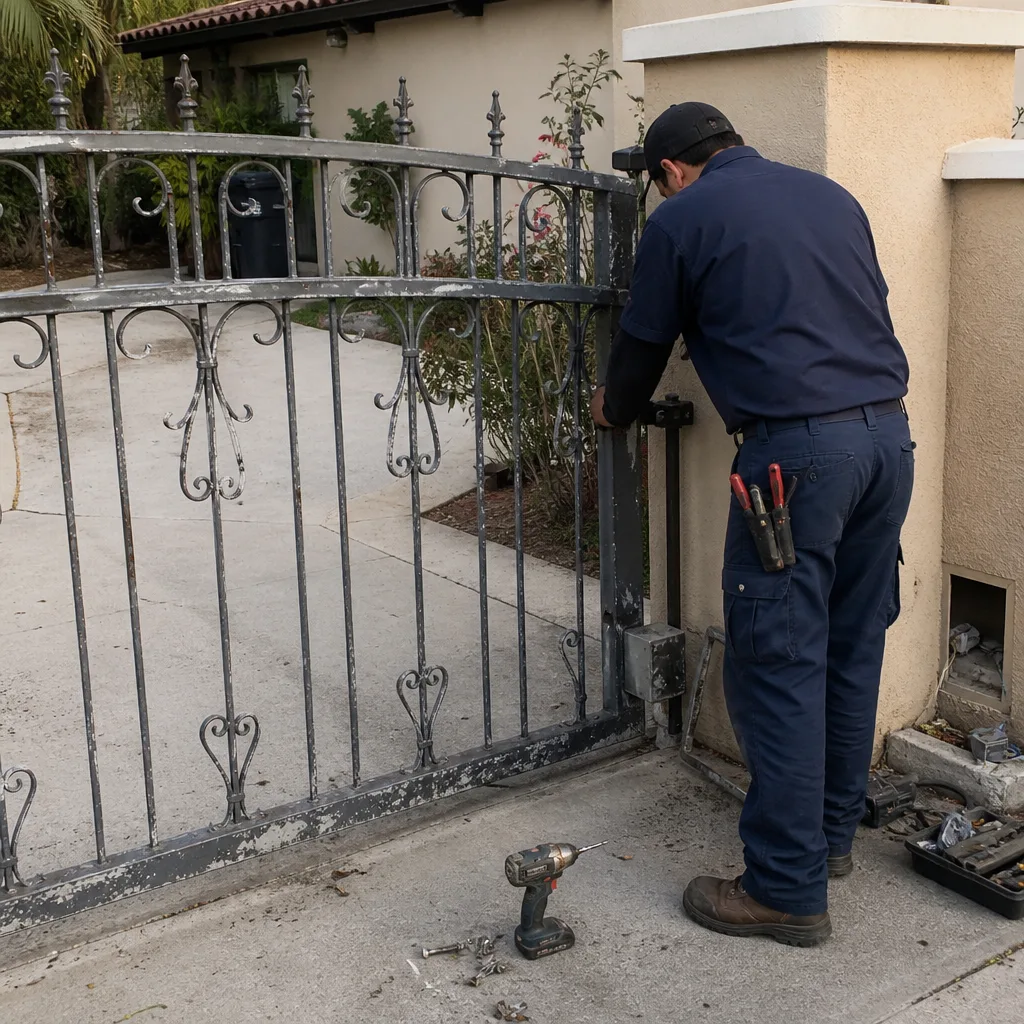 Before
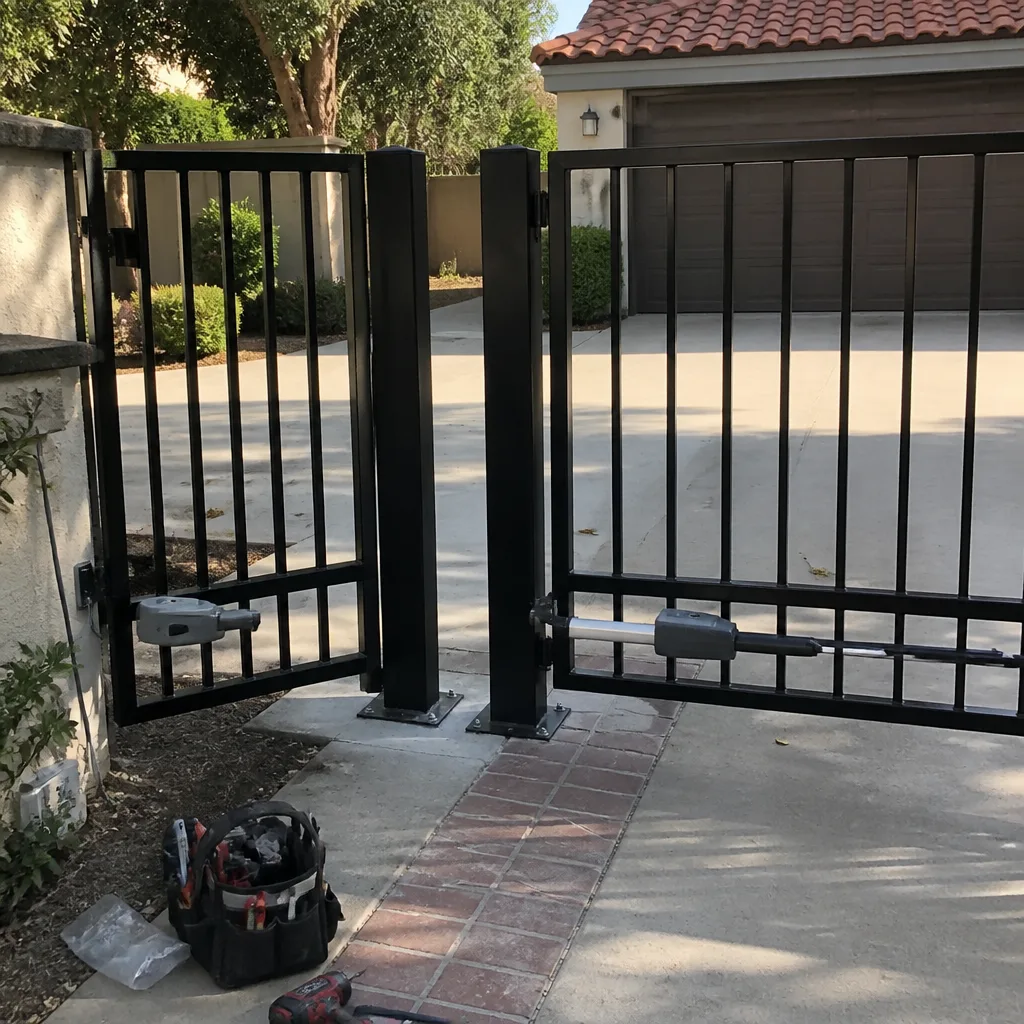 After
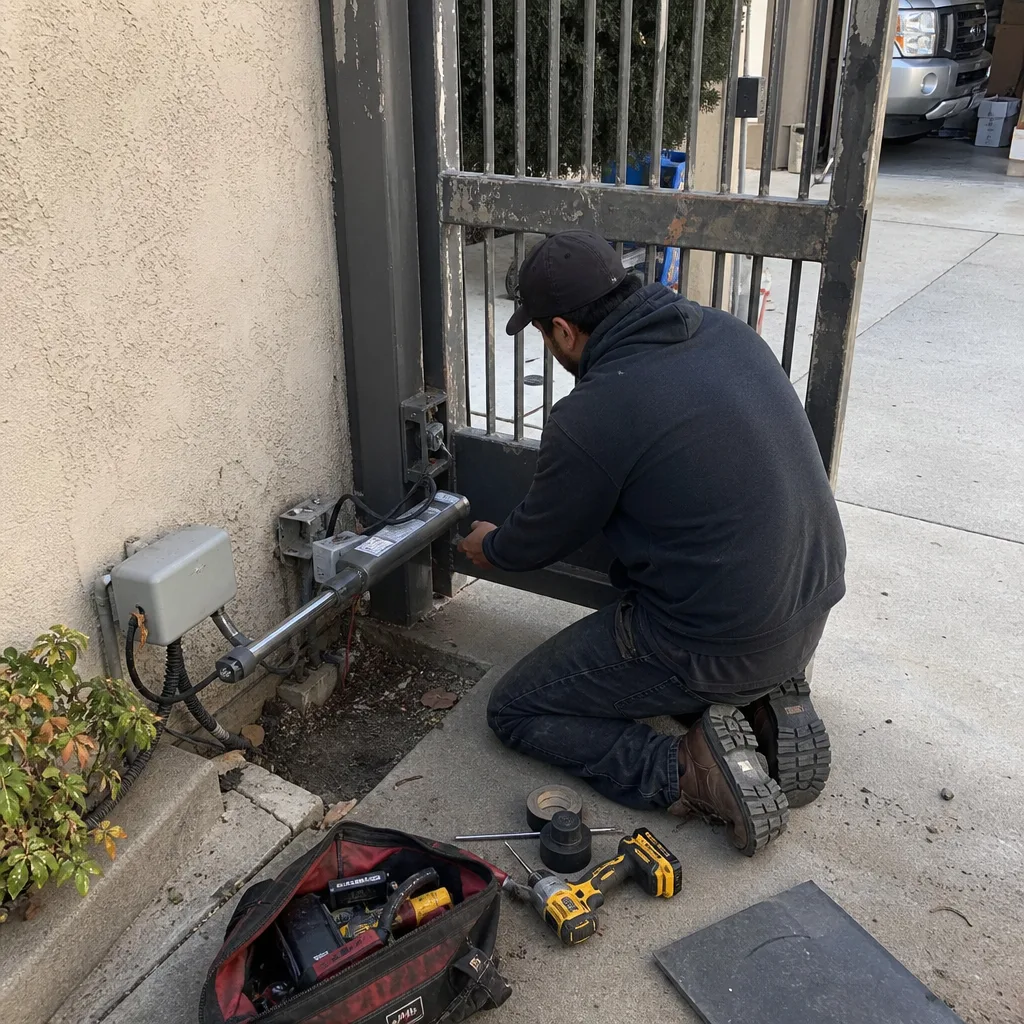 Before
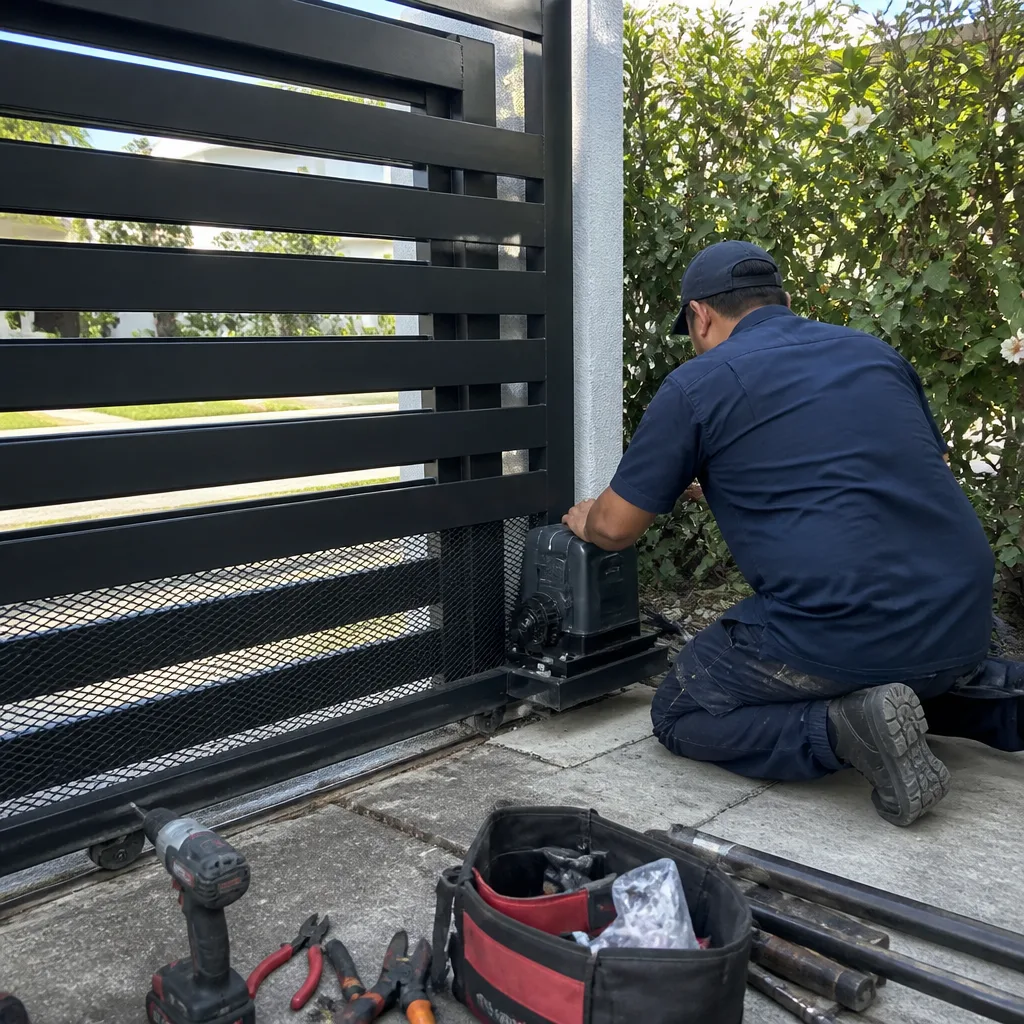 After
Gate Repair Permits, Codes & Inspections in CA: What You Need to Know
Most homeowners don’t realize their automatic driveway gate is effectively a piece of heavy machinery governed by at least four different California codes until the day a city inspector drives by, or a home sale stalls over a missing safety sticker. A gate that opens and closes fine can still be a code violation, a liability, and a deal-breaker at escrow. This guide walks through what California actually requires for gate repair, when a permit is triggered in Irvine, how inspections work, and the specific safety standards that apply to every automatic gate. We’ve repaired and replaced enough Irvine gates to know exactly where homeowners get tripped up.
Quick Answer
Most gate repairs in California, including spring replacement, hinge welding, opener repair, and board replacement, do not require a building permit. A permit is generally triggered when you install a new gate, alter a gate’s structural footprint, run new electrical from the panel, or install a new automatic opener system from scratch. Every automatic gate in California must meet UL 325 safety standards (photo eyes, reverse mechanism, warning signage) regardless of whether a permit was pulled, and failure to comply creates serious liability. In Irvine, the city follows California Building Code (CBC) with local amendments, and gate heights, setbacks, and electrical work fall under specific municipal review.
Table of Contents
- When Does Gate Work Require a Permit in California?
- California Codes That Govern Automatic Gates
- UL 325 Safety Standards: What the Inspector Checks
- Irvine-Specific Gate Requirements and Local Code
- Electrical Work, Conduit, and Low-Voltage Rules
- How Gate Inspections Work in Irvine
- HOA Rules vs. City Code: Which One Governs Your Gate?
- Common Mistakes to Avoid
When Does Gate Work Require a Permit in California?
The short answer: repairs do not, installations usually do. California code does not list “gate repair” as a permit-triggering activity, because a repair brings an existing installation back to its original compliant state. Replacing a broken hinge, welding a cracked frame, swapping a failed opener board, or installing a new spring on a swing gate are all considered like-for-like maintenance. The same logic applies to a bent gate wheel or a sagging post that gets re-set in its original footing. No permit, no inspection, no paperwork on your end. This is true in Irvine as it is statewide.
What flips the switch to a permit-triggering project:
- New gate installation on a property that did not previously have a gate, or a full replacement where the posts, footings, and footprint are changing.
- Structural alterations that change gate height, width, or load path, including going from a single swing leaf to a double leaf, or adding a pedestrian gate cut into an existing gate.
- New electrical runs from the main panel to the gate location, including a new 120V circuit, a new subpanel, or conduit run exceeding the scope of low-voltage repair.
- New automatic opener installation on a gate that was previously manual. Both the electrical work and the UL 325 compliance fall under review.
- Masonry column construction where a gate attaches to a new pillar, pier, or wall that functions as a structural member.
One nuance Irvine homeowners often miss: the city treats gate installations attached to new perimeter walls, courtyard walls, or front-yard enclosures as part of the same Improvement Project, and the combined scope can push a small job into a full plan review. If your gate project touches a new wall or fence line, expect the city to want drawings. If you’re only repairing the gate itself, you can rest easy.
California Codes That Govern Automatic Gates
Four codes apply to automatic gates in California, and the interactions between them are where confusion begins. You don’t need to memorize these, but knowing what each one covers prevents surprises during an inspection or a home sale.
- California Building Code (CBC), Part 2, Title 24: Governs structural components, wind load, post embedment, and gate construction standards. Adopted statewide, with Irvine enforcing CBC plus local amendments.
- California Electrical Code (CEC), Part 3, Title 24: Governs wiring, conduit, grounding, disconnects, and circuit protection for any gate opener or access control equipment that receives line voltage.
- California Fire Code (CFC): Governs gate access for emergency vehicles and requires that driveway gates not block fire department access. In gated communities, this means Knox key switches or override systems. Single-family driveway gates in Irvine typically fall under “passive barrier” rules but still must not obstruct the required clear width of the driveway approach.
- UL 325, incorporated by reference: The national safety standard for automatic gate operators. California does not have a separate state gate-safety code; it enforces UL 325 through the CBC and CEC.
When you hire a gate contractor in Irvine, the phrase “we follow UL 325” should be the baseline, not a selling point. Any repair involving the opener, the safety devices, or the control board should bring the entire automatic system into current UL 325 compliance, not just fix the broken part. That’s a distinction we hold to on every job, because a gate operator that works but lacks working photo eyes is a code violation and a lawsuit waiting to happen.
UL 325 Safety Standards: What the Inspector Checks
UL 325 exists because automatic gates have killed people, children especially, and the standard is written around preventing two specific hazards: entrapment and crushing. The standard applies to the gate opener as a system, meaning the operator, the safety devices, the gate itself, and the environment where the gate operates all factor into compliance.
The key requirements an inspector or knowledgeable contractor verifies:
- Entrapment protection devices. Photo eyes (non-contact sensors) mounted near the gate’s leading edge and trailing edge, positioned to detect a person or object in the gate’s path. They must stop and reverse the gate when the beam is interrupted.
- Reverse mechanism. The opener must reverse direction on contact with an obstruction. For swing gates, the open direction must stop if an obstruction is encountered. For slide gates, both open and close directions require a reverse.
- Warning signage. Two warning signs are required on every automatic gate: one on the gate itself (both sides), one on the adjacent fence or wall. The signs must be legible, weather-resistant, and placed in clear view.
- Manual disconnect. A means to manually operate the gate (disconnect lever or crank) so the gate can be opened during a power failure or emergency. For fire access purposes, this may need to be accessible from the exterior side.
- Gate travel stops. Mechanical limits that prevent the gate from traveling past its designed open or closed position. If your gate has been slamming against a post, the travel limits have failed, and that is a UL 325 violation, not just a wear item.
- Secondary entrapment protection for barrier gates. If the gate is a vehicular barrier with no pedestrian passage around it, additional protections apply. Most Irvine residential gates have pedestrian gates or walkways, which simplifies this requirement.
In our experience in Irvine, the two most common UL 325 failures on existing gates are missing photo eyes and dead reverse batteries. Homeowners inherit a gate from a previous owner, the photo eyes were removed years ago during a landscaping project, and nobody noticed because the gate “works.” It works until a child or dog is in the path. We treat every automatic gate repair as an opportunity to restore full UL 325 compliance, not just get the gate moving again.
Irvine-Specific Gate Requirements and Local Code
Irvine is a master-planned city, and that planning culture extends to how the city views gates. The City of Irvine has adopted the California Building Code with local amendments, and its enforcement around residential gates is consistent with its broader approach: clear rules, predictable review, and inspection scheduling that works on city time, not contractor time.
What Irvine homeowners should know:
- Front yard gate height limits. Irvine zoning code generally limits solid front-yard walls and gates to 42 inches within the front setback, though open or visually permeable gates (wrought iron, tubular steel) may exceed this under specific review. The exact height allowance depends on your setback, street frontage, and whether your home sits on a corner lot.
- Corner lot visibility. Irvine enforces clear-visibility triangles at intersections and driveway aprons. A gate installed too close to the street or too tall near a corner can obstruct driver sight lines and trigger a correction notice, even if the gate itself meets all other code.
- Community design review. If your home falls within a homeowners association (and most Irvine homes do), gate projects above ordinary repair may require HOA architectural review before the city will issue a permit. More on that below.
- Electrical service requirements. Irvine follows the CEC closely, and gate opener circuits installed after 2020 must include a dedicated circuit, GFCI protection where required, and proper disconnect means. A gate opener shared with landscape lighting on a single circuit is a common finding on older Irvine homes.
- Permit valuation and fees. Irvine calculates permit fees based on project valuation. For a standard single-swing gate installation with a new opener, most homeowners can expect the permit and plan-check fees to represent roughly 2-4% of the total project cost. Our advice: budget for it, and don’t let any contractor try to talk you into skipping it.
One Irvine-specific market reality: tract homes built in the 1970s through the 1990s, especially in neighborhoods like Northwood, Woodbridge, and University Park, often had manual gates installed by the original builder with no opener. When those homeowners later want automation, the conversation changes from “repair” to “new installation,” and the permit conversation begins. The same applies to many homes in Turtle Rock and Quail Hill, where steep driveways and custom gatework mean structural review is more than a formality.
Electrical Work, Conduit, and Low-Voltage Rules
Electrical work is where gate projects most often go sideways on code compliance. The mechanical side of a gate, hinges swinging and wheels rolling, is visible and intuitive. The electrical side is invisible, and mistakes hide for years until an inspector, an electrician, or a fire reveals them.
Key electrical rules for automatic gates in California:
- Dedicated circuit. A hard-wired gate opener should be on its own dedicated circuit. If your opener shares a circuit with garage outlets or landscape lighting, that’s a CEC violation and a practical problem: a tripped breaker from a hedge trimmer kills your gate access.
- Proper conduit. Line-voltage wiring to a gate must be in approved conduit (PVC or metal) buried to code depth, typically 18 inches for PVC and 6 inches for rigid metal conduit under a driveway or pathway. Low-voltage control wiring (photo eyes, keypads, intercoms) can use direct-burial rated cable but is safer and more serviceable in conduit.
- GFCI protection. Outdoor receptacles and any outlet serving gate equipment require GFCI protection. A gate opener that trips a GFCI repeatedly is a symptom of water intrusion or a failing component, not a reason to remove the GFCI.
- Disconnect within sight. The CEC requires a disconnecting means within sight of the motor. This is usually a lockable switch or breaker box near the gate. If you have to walk back to the main panel to kill power to the gate, that’s a violation on new installations.
- Low-voltage vs. line-voltage distinction. Many homeowners assume “low voltage” means “no rules.” The CEC has specific articles governing low-voltage landscape and control wiring, and sloppy low-voltage work (spliced cable buried without a junction box, exposed conductors at the gate) fails inspection just as surely as bad line-voltage work.
We’ve seen every variation of creative wiring in Irvine: extension cords buried under lawns, Romex stapled to a fence, low-voltage wire twisted together and wrapped in electrical tape under a planter. Each one was working, right up until it wasn’t. Correcting the electrical to code is frequently the most expensive part of a “simple” gate repair, and it’s the part no one budgets for because the previous owner hid it well.
How Gate Inspections Work in Irvine
If your gate project does trigger a permit, the inspection process in Irvine follows a standard sequence. The city’s Building and Safety Division handles gate and wall permits, and the process is more straightforward than most homeowners expect, provided the paperwork was done correctly up front.
Typical inspection sequence for a new automatic gate installation:
- Plan review. Submit your gate drawings, site plan showing setbacks and clearances, and electrical plan. The city reviews for zoning compliance, structural adequacy, and UL 325 integration.
- Permit issuance. Pay your fees, post your permit card, and confirm the inspector contact. The permit card must be visible from the street.
- Footing and post inspection. Before concrete is poured, the inspector verifies post hole depth, cage or rebar, and embedment. In Irvine, a typical driveway gate post footing is 30-36 inches deep, but your plans will state the required depth.
- Electrical rough inspection. With conduit laid in the trench and wire pulled but not yet energized, the inspector verifies conduit depth, wire gauge, bonding, and junction box placement.
- Final inspection. After the gate is hung, the opener installed, and all safety devices connected, the inspector tests the photo eyes, verifies the reverse function, checks signage, confirms the disconnect, and signs off.
What often surprises Irvine homeowners is how quickly a well-prepared project passes. The inspectors we work with care about three things: safety devices that actually function, conduit and wire that meet code, and signs that are legible and properly placed. When those three things are right, final inspection takes twenty minutes.
HOA Rules vs. City Code: Which One Governs Your Gate?
In Irvine, the truthful answer is: both, but they govern different things. City code sets the floor, the minimum legal standard. HOA covenants set the ceiling of what your community will allow aesthetically, and in Irvine’s master-planned villages, the HOA aesthetic rules are often stricter than city code.
Here’s how the two interact:
- City code says what’s legal. Height limits, setbacks, electrical standards, UL 325 compliance. The city does not care if your gate is black or bronze, or whether it matches your neighbor’s.
- HOA rules say what’s permitted. Approved materials, colors, styles, and sometimes approved vendors. Many Irvine HOAs have design guidelines that specify allowed gate styles and require architectural committee approval before installation.
- Repair vs. replacement distinction applies to both. Repairing an existing gate to its original state typically needs no HOA approval. Replacing a gate entirely, changing its color or style, or adding a pedestrian gate usually does.
- Enforcement differs. The city enforces through inspections and correction notices. The HOA enforces through fines and liens. Both have teeth, and they bite at different times.
Our recommendation for Irvine homeowners: if the gate project goes beyond repair, check with your HOA first, then the city. HOA approval takes time, usually 30-60 days depending on your community’s review cycle, and that clock should start before you pour concrete. We’ve seen too many homeowners install a beautiful gate that the HOA then required them to modify because the style wasn’t in the approved palette.
Common Mistakes to Avoid
- Skipping photo eyes on a replacement opener. The most common UL 325 violation we see in Irvine. A gate that reverses on contact but has no non-contact sensors is not compliant, full stop. Install the photo eyes.
- Running a new opener off a shared circuit. It works until the shared breaker trips, and then you’re climbing over your own gate. Dedicated circuit, every time. The CEC requires it on new work.
- Ignoring setback rules when moving a gate line. Moving a driveway gate closer to the street to gain parking space often violates Irvine’s front setback requirements and can create a visibility hazard. Check before you dig.
- Assuming a “working” gate is a “compliant” gate. A gate mechanism can function perfectly for years while missing required signage, safety devices, or a code-legal disconnect. Working and compliant are not the same thing.
- Replacing a gate without notifying the HOA. In Irvine’s planned communities, this is the most expensive mistake on this list. It’s cheaper to wait for architectural review than to replace a non-compliant gate twice.
- Using a non-certified opener board in a rebuild. A universal replacement board that doesn’t restore full UL 325 function, including photo eye monitoring and reverse logic, can leave you liable. Match the board to the system’s safety architecture, or replace the opener entirely.
- Burying line-voltage wire without conduit. This is the hidden hazard. Direct-buried THHN without conduit under a lawn fails inspection when found, and it’s a shock and fire hazard until then. Conduit is not optional.
When to Call a Professional
Some gate work is genuinely DIY territory: lubricating hinges, tightening a sagging chain, adjusting a photo eye bracket. Other work should never be attempted by a homeowner. If your gate project involves running new electrical from the panel, welding structural members, replacing a spring under tension, setting new posts in concrete, or integrating an opener with access control, hire a licensed professional. The cost of a correction is always higher than the cost of doing it right. Ironworks Gate Co. offers free estimates in Irvine. Call (213) 566-7552 and we’ll walk the site, tell you what the gate actually needs, and write it down so you can decide with clear numbers.
Frequently Asked Questions
No. Repairing or replacing a gate opener on an existing automatic gate is considered maintenance and does not require a permit, provided the work does not include new electrical runs from the panel. This applies throughout California, including Irvine. If the opener replacement is paired with new conduit or a new circuit, the electrical portion may require a permit.
Yes. A new gate installation, especially one that includes new posts, new footings, new electrical service, or a new automatic opener, requires a building permit through the City of Irvine. The permit will cover the structural work, the electrical work, and the UL 325 safety compliance as one application. Budget 2-4% of project cost for fees and plan review.
Under UL 325, every automatic gate requires entrapment protection, which means photo eyes or equivalent non-contact sensors, a contact reverse mechanism, two warning signs, and a manual disconnect. These requirements apply to all automatic gates in California, regardless of whether a permit was pulled. Call (213) 566-7552 if you’re unsure whether your gate is compliant.
Only up to the city’s height limit. HOA approval governs aesthetics and style; the City of Irvine still enforces zoning height limits based on your setback and lot configuration. A gate that exceeds the city maximum is a code violation even with HOA sign-off. The approval order is: HOA first, then city permit.
Plan review for a simple residential gate installation typically takes two to four weeks in Irvine, with final inspection scheduled after installation. HOAs add their own review time, usually 30-60 days. Start the paperwork early, and schedule installation accordingly.
Unpermitted gate work can surface during escrow as a disclosure issue. The seller is required to disclose unpermitted work, and buyers may demand retroactive permitting or a credit. This is why we always advise Irvine homeowners to permit new installations. A permitted gate is a transferable asset, not a negotiation point at closing.
The Bottom Line
Gate repair in California rarely requires a permit, but gate installation, structural change, and new electrical work usually do. Every automatic gate must meet UL 325 safety standards, and a gate that “works” is not necessarily a gate that’s legal. In Irvine, city code and HOA rules both apply, and the smart order is HOA approval first, city permit second, installation third. If you’re unsure where your gate project falls, or you want to know whether your existing gate would pass an inspection, call Ironworks Gate Co. at (213) 566-7552. We’ll give you a straight answer and a written estimate, free of charge.
Written by the team at Ironworks Gate Co.