
Last updated August 25, 2026
Free on-site gate assessment - hinges, posts, and your LiftMaster or Nice gate operator checked before anything is quoted
The assessment is free and the quote is the invoice.

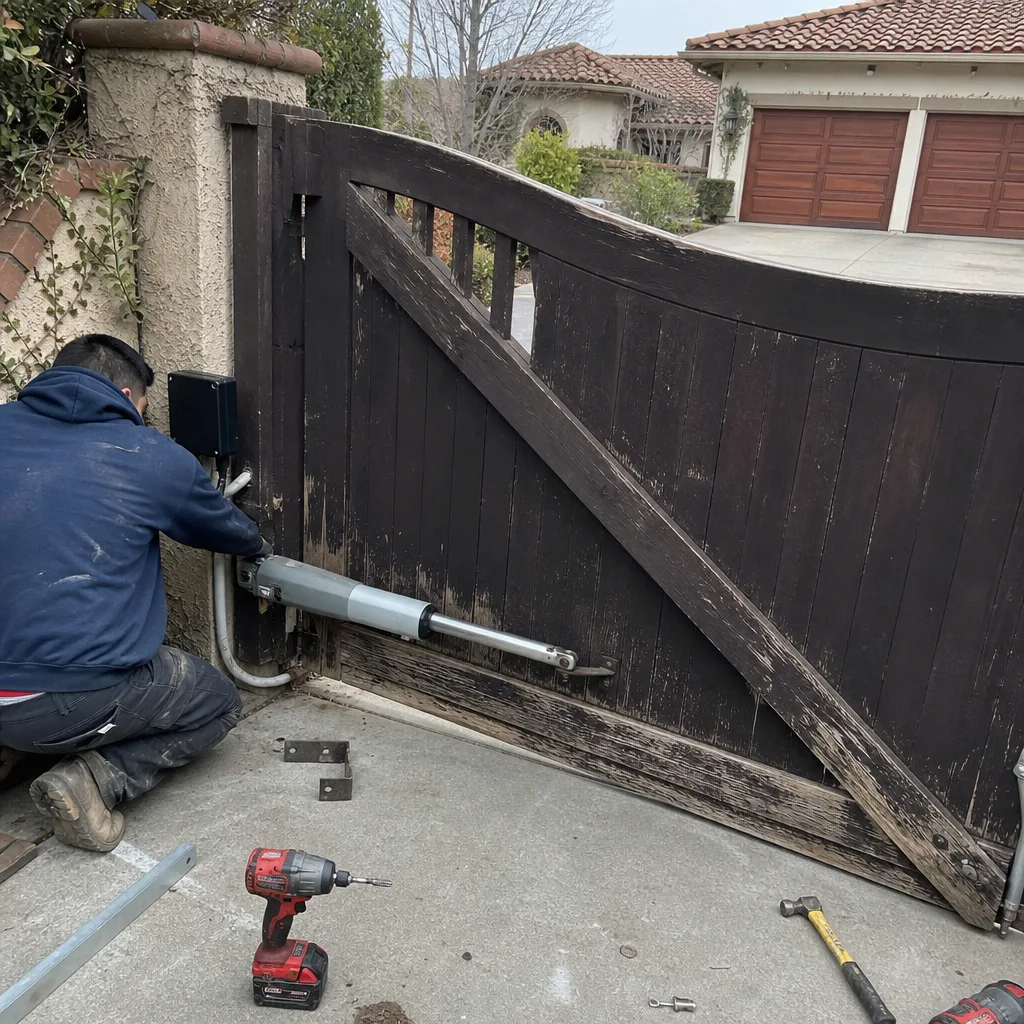 Before
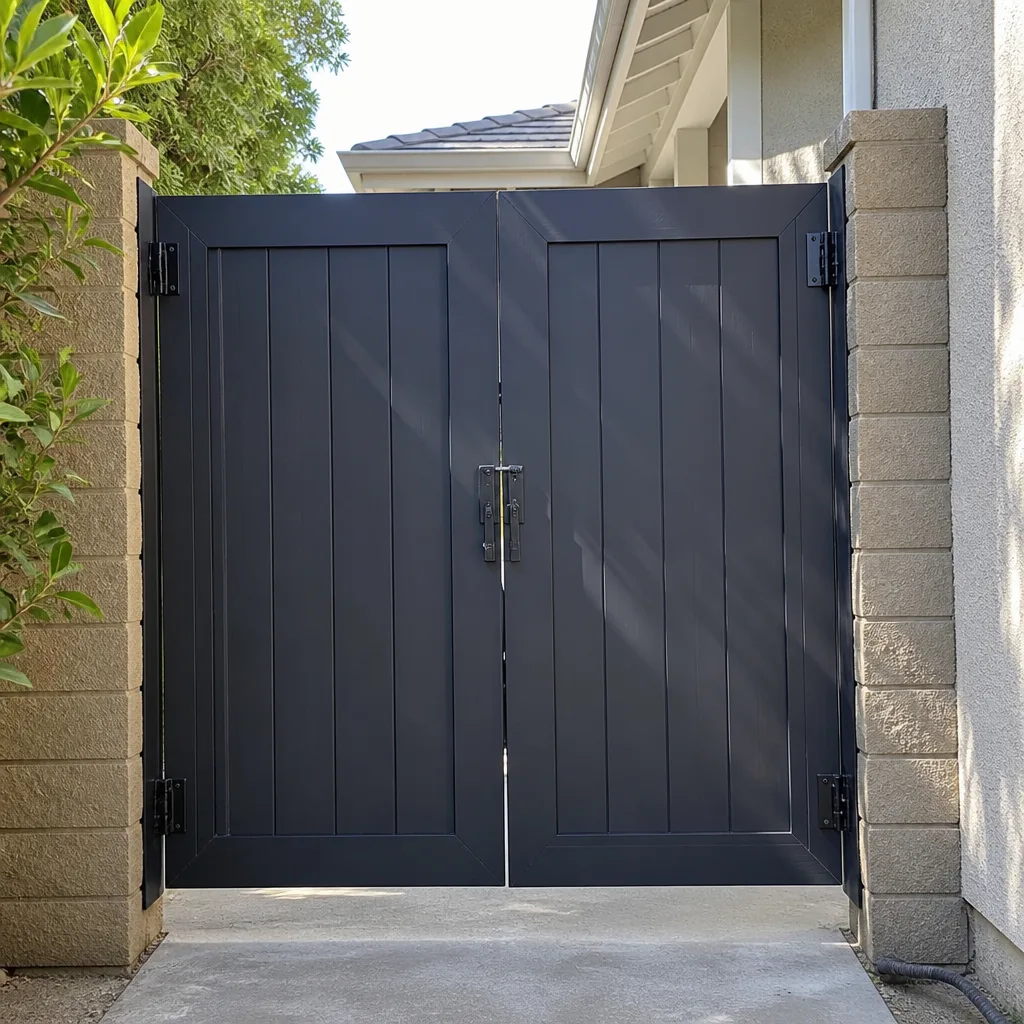 After
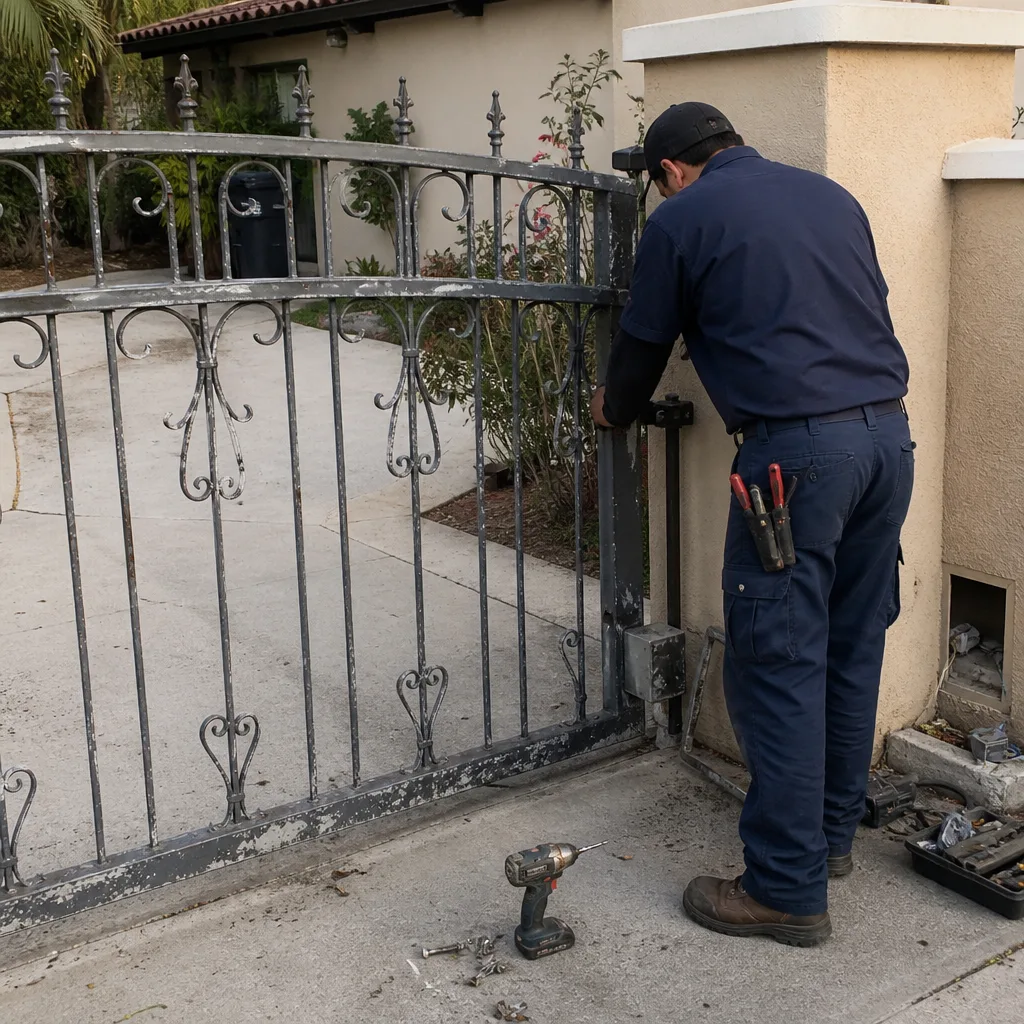 Before
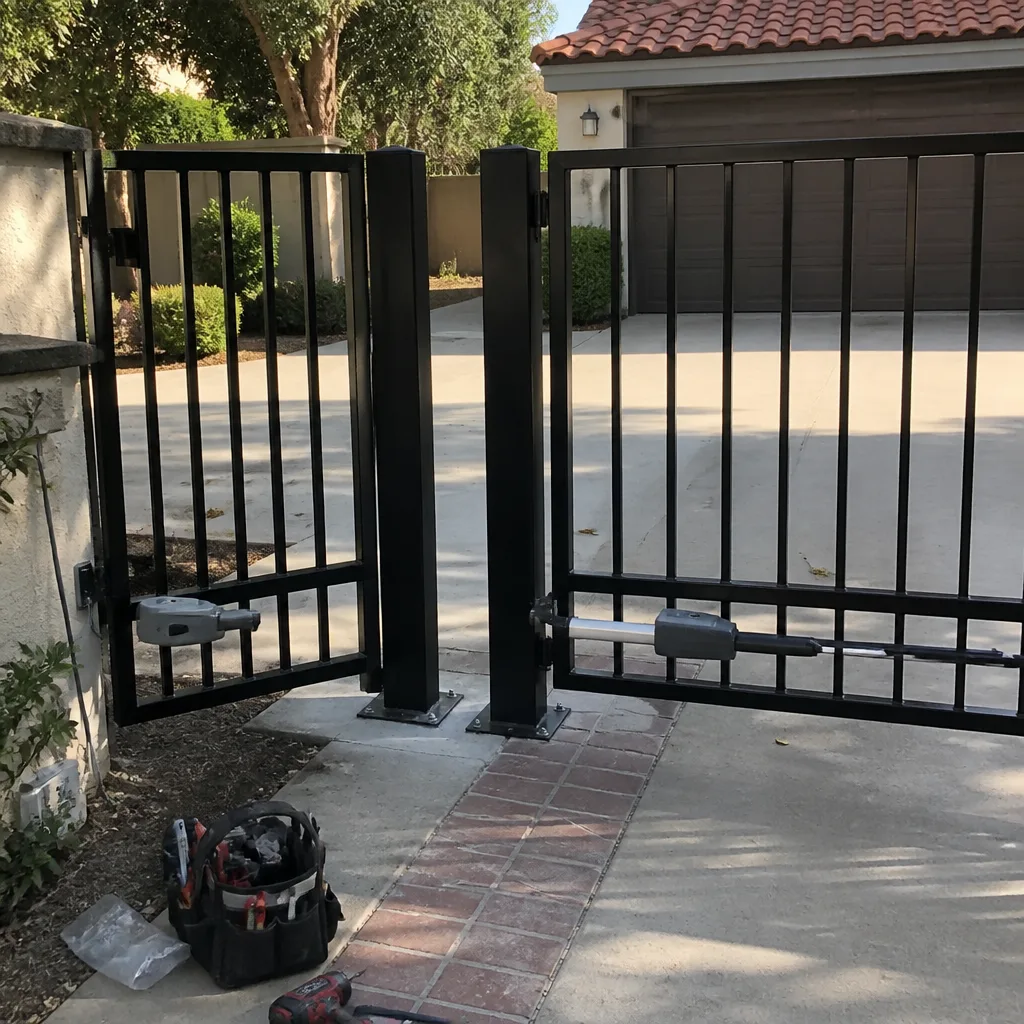 After
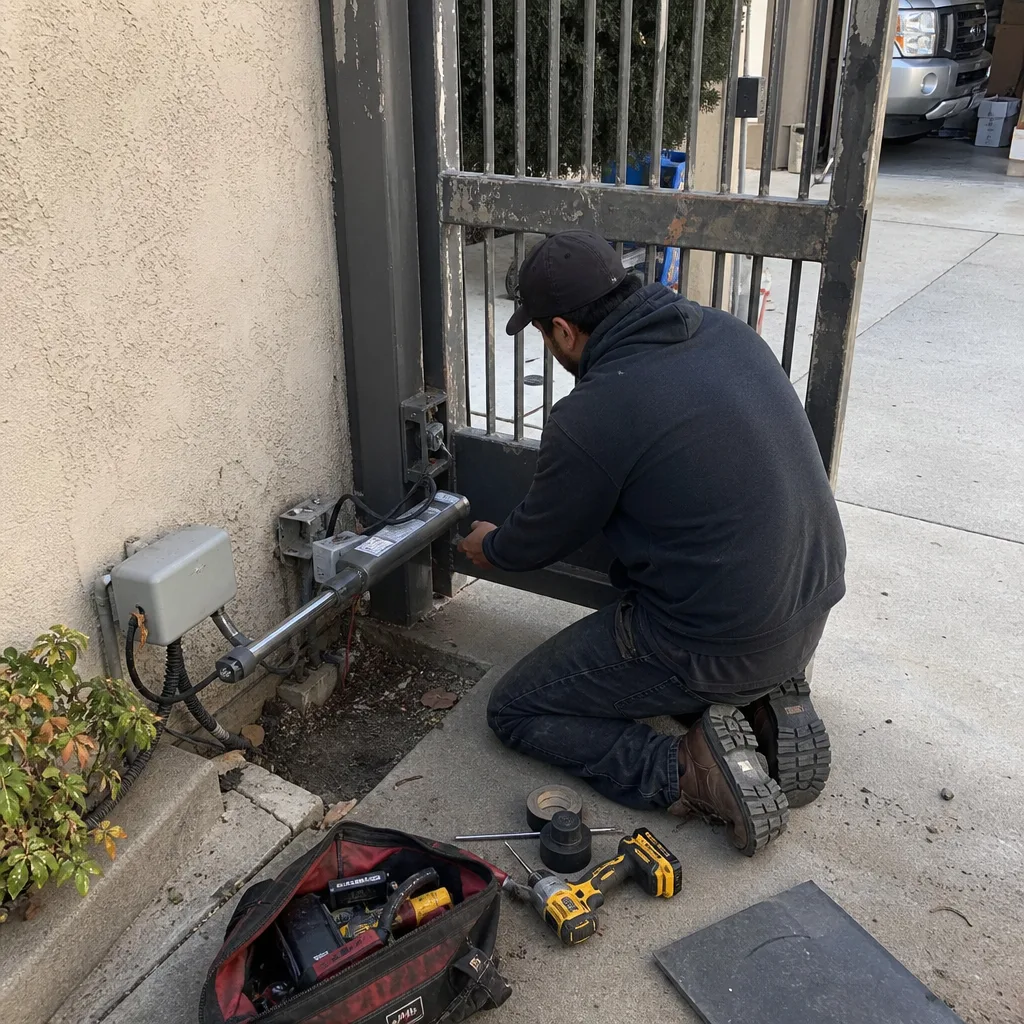 Before
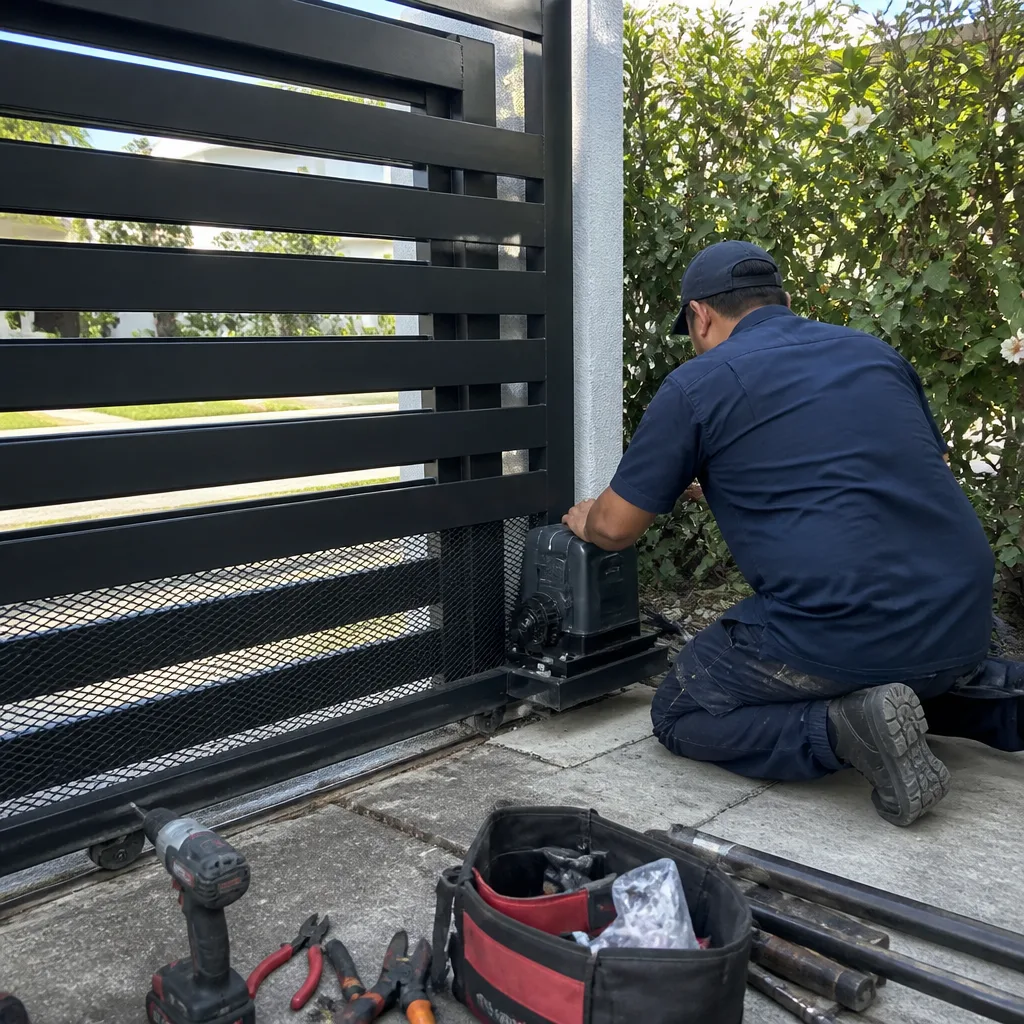 After
Gate Repair Maintenance Checklist for Irvine Homeowners
Most gate failures in Irvine don’t start with a loud bang. They start quietly: a hinge that has been dry for two years, a capacitor that is tired of the heat, a sensor eye that gets dusted with Santa Ana grit every October. By the time the gate refuses to open on a Tuesday morning, the problem has usually been building for months. This guide is a homeowner’s maintenance checklist, written from 42 years of fixing gates in Southern California. You’ll learn what to check monthly, what to leave alone entirely, and when a phone call now saves you a $1,400 motor replacement later. We’ve organized it so you can spend fifteen minutes a season and never think about your gate again. Irvine’s climate, with its coastal air and canyon winds, creates a specific set of wear patterns, and this guide speaks to those directly.
Quick Answer
A gate maintenance checklist for Irvine homeowners comes down to four seasonal tasks: clean the track and wheels, lubricate the hinges and bearing points, test the safety sensors and auto-reverse, and inspect the welds, bolts, and chain tension. Most homeowners can handle the cleaning and visual checks in about fifteen minutes per season. Anything involving springs, high-tension cables, or the motor itself should be left to a trained professional.
Table of Contents
- The 10-Minute Monthly Visual Inspection
- What to Lubricate, What to Leave Alone, and When
- Testing the Safety Systems That Keep Your Family Safe
- How Irvine’s Climate Attacks Your Gate
- The Seasonal Gate Maintenance Checklist
- Wheel, Track, and Roller Care: The Workhorse Parts
- What Not to Do Yourself: Springs, Cables, and Motors
- Common Mistakes to Avoid
- When to Call a Professional
- Frequently Asked Questions
- The Bottom Line
The 10-Minute Monthly Visual Inspection
This is the single highest-return habit we can recommend, and it is the same one we perform on every service call in Irvine before we touch a tool. Walk out to your gate once a month with your phone’s flashlight and a rag. That’s the whole kit. The goal is not to fix anything. The goal is to notice changes before they become failures.
Here is the inspection sequence we teach to homeowners in neighborhoods from Woodbridge to Turtle Rock:
- Stand at the closed gate and look at the top rail. Is it level? A gate that sags even half an inch at the free end is telling you a hinge is wearing or a weld is cracking.
- Open the gate halfway and let go. Does it drift? A gate should stay put. Drift means the opener’s brake is weakening or the gate is out of balance.
- Look at every bolt head you can see. Surface rust is cosmetic. Flaking rust or a rust ring around a bolt head means moisture is working its way in. In Irvine’s coastal neighborhoods, this is more common than people expect.
- Run your hand along the bottom rail. Debris, leaves, and pebbles collect there. They end up in the track and grind against the wheels.
- Listen. Open and close the gate once. A squeal means dry metal. A grinding sound means something is in the track. A rhythmic clicking means a chain or belt issue. No sound at all, when there used to be a smooth hum, can mean a failing capacitor.
Fifteen minutes a month. That is the whole program. The point is not to become a gate technician. The point is to catch the small stuff while it is still small. In our experience, homeowners who do this monthly call us for a $120 wheel replacement instead of a $1,800 motor overhaul. The gate tells you what it needs. You just have to be in the habit of listening. And if you want the clearest starting point, take a look at our Ironworks Gate Co. home page to see the full scope of what we service.
What to Lubricate, What to Leave Alone, and When
Lubrication is the most misunderstood part of gate maintenance. Homeowners spray WD-40 on everything and call it done. That creates a bigger problem than it solves. Here is the straight answer: use a dry silicone spray or white lithium grease on metal-on-metal contact points. Never use WD-40 as a lubricant. It is a solvent and a water displacer, and it strips away the lubricant that was already there.
What to lubricate, in order of importance:
- Hinge pins and pivot points. These carry the entire weight of the gate. Dry hinges wear egg-shaped holes over time, and then the gate sags and the opener works twice as hard. A short spray on each hinge pin, twice a year, is the highest-value lubrication you will ever do.
- Wheel bearings. If your gate rolls on a track, the wheel bearings take constant load. Spray the bearing area, not the wheel tread. Grease on the tread just attracts grit.
- Chain drives. A light coat of chain lubricant once a year. Too much lube flings off and collects dust. The chain should look damp, not wet.
- Latch and lock hardware. A dry latch is a common cause of a gate that won’t close properly. A quick shot of silicone on the latch bolt keeps it moving freely.
What to leave alone entirely:
- The motor housing. Never spray anything into or around the motor. Modern gate motors are sealed units. Spraying lubricant near the motor just gives dust a place to stick. We’ve serviced gate openers in Irvine that failed early because years of spray lubricant had built up a dust cake inside the housing and cooked the capacitor.
- Electrical connections and limit switches. Lubricant on electrical contacts creates resistance and heat. Leave them dry.
- Sensors and photo eyes. Clean them with a dry microfiber cloth. Never use a wet cloth, and never spray cleaner directly on the lens.
The schedule is simple: spring and fall. Twice a year, lubricate the hinges, wheels, and chain. That aligns with Irvine’s seasonal shift, when temperature and humidity swings are largest. If your gate faces south or west and takes full afternoon sun, move the spring lubrication to early March. The heat accelerates how fast lubricant breaks down.
Testing the Safety Systems That Keep Your Family Safe
Your gate’s safety systems are not optional, and they are not decoration. They are the difference between a gate that stops when a child runs behind it and a gate that does not. In Irvine, where many homes have pools and families spend the bulk of the year outdoors, we cannot overstate how important this is. Every automatic gate opener sold in the last twenty years is required to have an auto-reverse mechanism and safety sensors. But those systems only work if they are tested.
Here is the test we recommend every single month:
- Test the auto-reverse on the gate itself. Place a solid object in the gate’s path, something like a trash can or a cardboard box that you don’t mind scuffing. The gate should reverse within two seconds of contacting the object, every time, without fail.
- Test the photo eye sensors. These are the small sensors mounted low on either side of the gate opening. Wave your hand in front of the beam while the gate is closing. The gate should stop and reverse immediately. If it doesn’t, clean the sensor lenses with a dry cloth and test again. Still failing? Call a professional that day.
- Check the warning beacons and strobes. If your gate has a warning light or alarm, make sure it activates before the gate starts moving. These are required on many Irvine properties with driveway gates, and they are not just for show.
- Confirm the manual release works. Every automatic gate has a manual release mechanism, usually a key or a pull handle. Test it once a quarter. If the power goes out, you need to know you can still operate the gate by hand. In wildfire season, when Southern California Edison sometimes cuts power during high winds, this becomes an emergency access issue.
One more thing that belongs in this section even though it is not a test: keep the area around the gate clear. Kids’ toys, pool floats, gardening equipment. Anything within three feet of the gate’s swing or slide path is a hazard. We’ve seen gates in Irvine neighborhoods knock over bikes, damage cars, and in one case bend a steel trash can in half. The safety systems are there to prevent the worst, but a clear gate path prevents the rest.
How Irvine’s Climate Attacks Your Gate
Irvine has a specific climate profile, and it matters for gate maintenance. We get marine layer mornings in the coastal-adjacent neighborhoods, dry heat through the summer, and Santa Ana winds in the fall. Each of these leaves a different mark on your gate.
The marine layer and salt air. Neighborhoods closer to the coast, like University Park and lower Turtle Rock, get enough morning moisture to accelerate surface rust on unprotected steel. The salt content in that air is low compared to a beach city like Newport, but over twenty years it adds up. If you live within three miles of the 405’s western edge in Irvine, your gate hardware will rust faster than a gate in Northwood. Paint chips, thin spots in powder coating, and bolt heads are the first places rust takes hold. Touch-up paint and annual bolt inspection are not optional in these neighborhoods.
The dry heat and capacitor fatigue. Gate motors, and specifically the capacitors that start them, do not like heat. Irvine’s summer days easily clear 90 degrees, and a gate motor sitting in direct sun on a west-facing driveway can see internal temperatures far higher than the air temperature. Capacitors are the single most common motor component we replace, and heat is the biggest driver of capacitor failure. The hotter and more exposed your motor housing, the more important it is to keep the area around it shaded and ventilated. Even a simple awning or an adjustment to the motor’s position can extend its life by years.
The Santa Ana winds and airborne grit. Every October and November, the Santa Anas push dust, sand, and fine grit across the Irvine valley. That grit lands in your gate track, in your chain, on your wheel bearings, and in your sensor lenses. A gate that moves freely in September can start grinding in November because the track is full of windblown sand. This is why we recommend a track cleaning after the first major Santa Ana event of the season, not just on a fixed calendar.
The point is not to worry about your gate. The point is to understand that Irvine’s climate does the worrying for you. A maintenance schedule built around the city’s actual weather patterns works better than a generic one-size-fits-all checklist. That’s the difference between a gate that lasts fifteen years and a gate that lasts thirty. Our gate repair services page covers the common failures we see across every Irvine zip code.
The Seasonal Gate Maintenance Checklist
Here is the full seasonal checklist, written specifically for Irvine’s climate and condensed into one place. Print it, save it, or just remember the broad strokes. Each season takes about fifteen to twenty minutes.
Spring (March - April)
- Lubricate all hinges, pivot points, wheel bearings, and the chain if you have one.
- Check for winter moisture damage: surface rust, paint bubbles, swollen wood if your gate has wood elements.
- Clean the photo eye sensor lenses with a dry microfiber cloth.
- Test the auto-reverse mechanism.
- Inspect all welds for hairline cracks, especially where the gate frame meets the hinge side.
Summer (June - July)
- Check the motor housing for excessive heat. If it’s too hot to hold your hand on for five seconds, consider adding shade.
- Clear the track of any accumulated debris, pebbles, and leaves.
- Listen for new sounds during operation: grinding, clicking, or a change in the motor’s pitch.
- Inspect the wheel treads for flat spots or chips.
- Test the manual release mechanism.
Fall (October - November)
- After the first major Santa Ana wind event, thoroughly clean the gate track and wheel area.
- Check the gate’s balance by opening it halfway. If it drifts, call a professional before the opener works harder than it should.
- Inspect the chain or belt tension. A loose chain jumps. An overtight chain wears out bearings.
- Lubricate the hinges again, before the winter moisture arrives.
- Clean the sensor lenses again, carefully. Santa Ana dust is fine and abrasive.
Winter (December - February)
- Check all bolts and fasteners for tightness. Cold snaps and moisture cycles loosen bolts over time.
- Look for rust on the bottom rail and any part of the gate that sits close to the ground.
- Test the auto-reverse and photo eyes after any period of heavy rain.
- Inspect the keypad and intercom housing for water intrusion. Irvine’s winter rain is not heavy, but a cracked housing lets water in anyway.
That is the whole year. If you do these four checks, your gate will give you years of quiet, reliable service. If you skip them, the gate still works, right up until the day it doesn’t, and that day is always more expensive.
Wheel, Track, and Roller Care: The Workhorse Parts
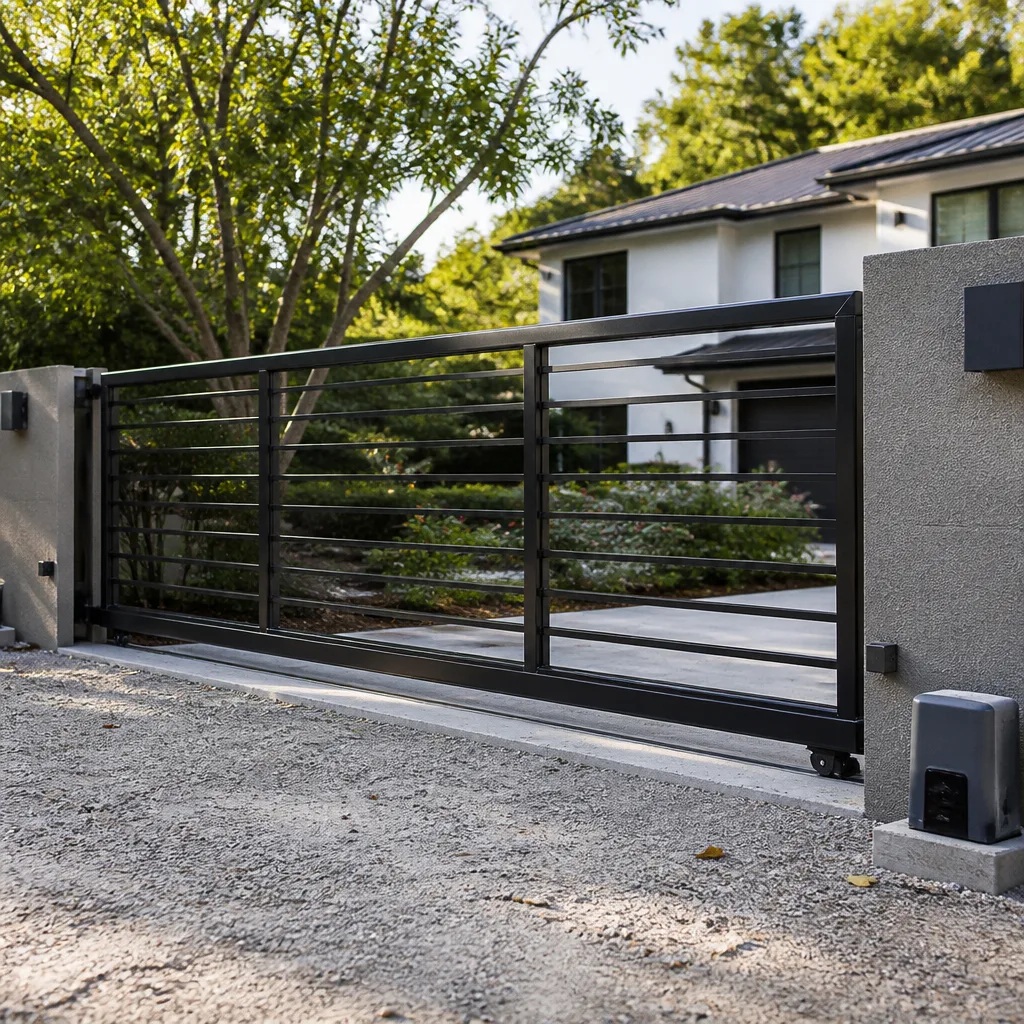
Slide gates dominate Irvine driveways, and slide gates live or die by their wheels and track. These parts carry the entire weight of the gate every single day. When they wear out, the gate starts to drag, the motor pulls harder, and then the motor burns out. It’s a predictable failure chain, and it always starts with the wheels.
Here is what you need to know about wheel and track care:
- Clean the track monthly. Use a leaf blower, a broom, or just your hands. Remove leaves, pebbles, and any dirt that has accumulated. In Irvine, where eucalyptus and pepper trees drop debris year-round, a clean track is the most important thing you can do for your slide gate.
- Inspect the wheels for wear. Look for flat spots, chips, or a wheel that doesn’t spin freely. A wheel with a flat spot thumps every time it rolls over that section of track. That thump travels through the gate frame and into the motor. Over time, it loosens bolts and shortens the motor’s life.
- Check the track alignment. The track should be straight and level. A gate that’s been hit by a car, even at low speed, can knock a track section out of alignment. If your gate hesitates or shudders at the same spot every time, the track is probably the culprit.
- Keep the track dry and free of standing water. Standing water in the track accelerates rust and, in heavier rain, can cause the wheels to hydroplane slightly. Make sure water drains away from the track, not into it.
Cantilever gates, which roll on rollers above the ground rather than a track in the ground, need a slightly different check. The rollers should spin freely by hand when the gate is not under load. If they don’t, the bearings are seizing, and a seized bearing eventually grinds itself flat. Cantilever gates are popular in Irvine’s newer neighborhoods, and they’re quieter than track gates, but they still need bearing checks twice a year.
The wheels and track are not glamorous, but they determine how hard every other component works. Replace a worn wheel before it damages the track. Replace a bent track section before it damages the wheels. These are inexpensive repairs compared to replacement of a burned-out motor that was pulling against a dragging gate. Our gate parts and welding page covers the components we replace most often, including wheels, rollers, and track sections.
What Not to Do Yourself: Springs, Cables, and Motors
This section is short, and it is the most important one in this guide. There are parts of your gate that are safe to inspect, and there are parts that are dangerous to touch. The line is simple: if the part is under tension or carries current, leave it alone.
Gate springs. Some gates, particularly larger estate gates in Irvine’s Shady Canyon and Turtle Rock areas, use counterbalance springs to reduce the load on the motor. These springs are under enormous tension. If one lets go while you’re working on it, it can cause serious injury. Do not attempt to adjust, remove, or replace a gate spring. This is a job for a professional with the right tools and the right experience. What you can do: inspect the spring visually. Look for rust, cracks, or a spring that has visible gaps between coils. If you see any of those, call a professional. Do not touch the spring.
High-tension cables. Cantilever and some slide gates use cables under tension. Like springs, these cables can snap and whip. A visual inspection is fine. Any fraying, kinking, or broken strands mean a professional call. Do not attempt to adjust cable tension yourself.
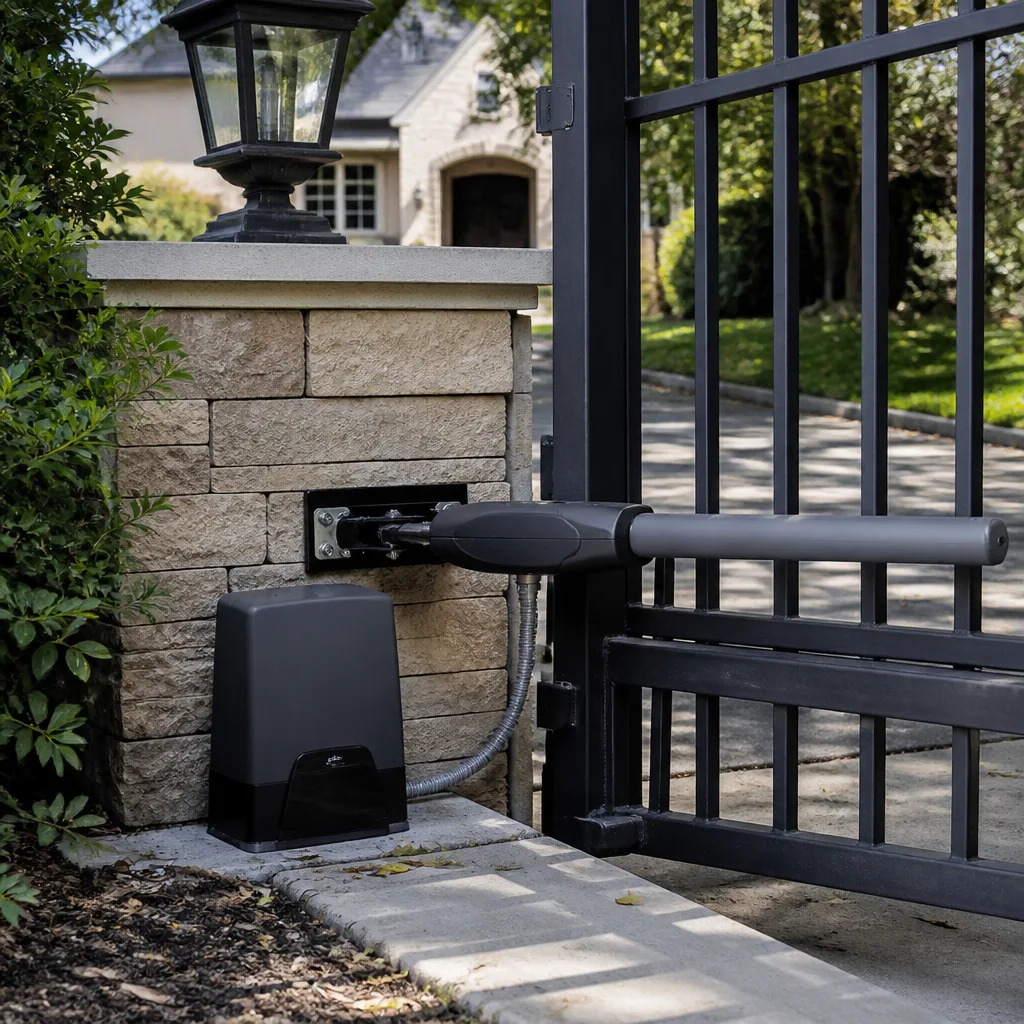
The motor and its electrical connections. Gate motors run on line voltage in many cases, and even low-voltage motors have capacitors that hold a charge long after power is disconnected. A capacitor can deliver a painful shock even when the gate is unplugged. Do not open the motor housing. What you can do: keep the outside of the housing clean and dry, check the power cord for damage, and listen for unusual sounds. Anything beyond that is a professional job.
We want homeowners to be informed, not endangered. The inspections and maintenance tasks in this guide are designed to be safe. The repairs that are not in this guide are not in it for a reason. When in doubt, call someone who does this work every day.
Common Mistakes to Avoid
- Using WD-40 as a lubricant. WD-40 is a water displacer and solvent, not a lubricant. It strips existing lubrication and leaves metal dry. Use dry silicone spray or white lithium grease instead. We see this mistake more than any other on gate hinges across Irvine.
- Ignoring a gate that is a little slower than it used to be. A gate that opens noticeably slower is a gate whose motor is working harder than it should. The cause is usually a lubrication or motor issue. Ignoring it turns a $120 fix into a $1,800 replacement.
- Waiting to fix a sagging gate. A gate that sags slightly at the free end is a hinge that is wearing. The longer it sags, the more it stresses the welded frame and the opener. In coastal Irvine neighborhoods, the salt-laced air accelerates the damage.
- Spraying lubricant on the motor or sensor lenses. Lubricant on the motor attracts dust and debris that shorts out components over time. Lubricant on the sensor lenses creates a film that blocks the beam. Keep all lubricants away from electrical and optical components.
- Forgetting to test the auto-reverse after a power outage. Power outages happen during Santa Ana winds, heat waves, and the occasional grid issue. After a power outage, some openers reset to default settings, and the safety reversal settings can be lost. Always test after a power event.
- Trying to fix a gate spring or cable by hand. These parts are under high tension and can cause severe injury. The money saved on a DIY repair is never worth the risk. This is the one rule we will never soften on.
- Neglecting the track alongside the gate itself. Homeowners focus on the gate leaf and forget the track. But a dirty, bent, or misaligned track causes wear on every moving part. In Irvine’s dry, dusty conditions, track cleaning needs to happen more often than people expect.
When to Call a Professional
Some gate issues are maintenance. Some are warning signs. Knowing the difference saves you money and protects your family. Call a professional if your gate sags visibly at the free end, if the motor makes a grinding or buzzing sound that it did not make before, if the auto-reverse fails a safety test, if the gate moves unevenly or shudders at a specific spot, if you find cracked welds or rusted-through sections, or if the opener simply stops responding. Any work involving springs, high-tension cables, or the motor housing should always be handled by a trained technician. Ironworks Gate Co. offers free estimates in Irvine, call (213) 566-7552 and we’ll come out, take a look, and give you a straight answer. We service all nine major automation brands, including FAAC, BFT, Linear, and Viking, so whatever is on your driveway, we can diagnose it on the first visit.
Frequently Asked Questions
Twice a year, in early spring and early fall, is the right cadence for Irvine’s climate. Use a dry silicone spray or white lithium grease on the hinge pins and pivot points. If your gate faces west and takes full afternoon sun, lubricate three times a year, adding a mid-summer application. The heat breaks down lubricant faster in exposed locations. For a full seasonal tune-up that includes lubrication, our $89 tune-up covers everything in one visit. Call (213) 566-7552 to schedule.
No. A sagging gate is almost always a worn hinge pin, a stretched hinge, or a cracked weld, and making the wrong adjustment can stress the frame and the opener. Hinge replacement on a heavy driveway gate requires specialized tools and experience. The gate has to be properly supported while the hinge is replaced, and getting it wrong can damage the gate, the opener, or both. This is a professional repair, and it is one we do regularly in Irvine. Estimates are free.
In our experience, a well-maintained gate motor in Irvine lasts between 10 and 15 years. Motors in direct afternoon sun, or in neighborhoods with heavy salt air near the western edge of the city, tend to fail closer to the 8 to 10 year mark. The biggest killers are heat, dust, and a gate that’s out of balance, which makes the motor work harder on every single cycle. Regular maintenance extends motor life more than anything else you can do.
First, use the manual release mechanism to open the gate by hand, so you’re not trapped. The manual release is usually a key or a pull handle located near the motor. Then check your breaker panel. If the breaker is fine and the gate still won’t respond, the surge may have damaged the control board or the capacitor. Call a professional to diagnose it. This is a common issue in Irvine during Santa Ana wind season, when power cuts happen more often.
Yes. Winter in Irvine is when temperature swings and the occasional rain combine to accelerate rust and loosen fasteners. The marine layer brings morning moisture into coastal-adjacent neighborhoods, and even a small amount of standing moisture on exposed steel starts surface rust within weeks. Winter is also when you’ll notice any water intrusion into the keypad or intercom housing. Stick to the quarterly schedule even if the weather feels mild.
Yes. We’re trained and equipped to service FAAC, BFT, Linear, Viking, LiftMaster, Ghost Controls, DoorKing, Elite, and Mighty Mule openers. That means whatever is on your driveway, we can diagnose it accurately on the first visit rather than guessing. Every repair comes with our Done Right Promise in writing. Call (213) 566-7552 for an exact quote, estimates are free.
The Bottom Line
A gate is a mechanical system, and like any mechanical system, it lasts longer when it’s maintained. Fifteen minutes a month, a few lubrication sessions a year, and a commitment to testing the safety systems is all it takes. The payoff is a gate that works quietly and reliably for decades, and a motor that doesn’t die an early death from working against a gate that was never cleaned or lubricated. Irvine’s climate is not kind to metal, but a simple maintenance routine neutralizes most of the damage. When the job does need a professional, do it right the first time and get the work guaranteed in writing. Done right, and backed in writing, that’s the standard that matters.
Written by the team at Ironworks Gate Co.