
Last updated August 25, 2026
Free on-site gate assessment - hinges, posts, and your LiftMaster or Nice gate operator checked before anything is quoted
The assessment is free and the quote is the invoice.
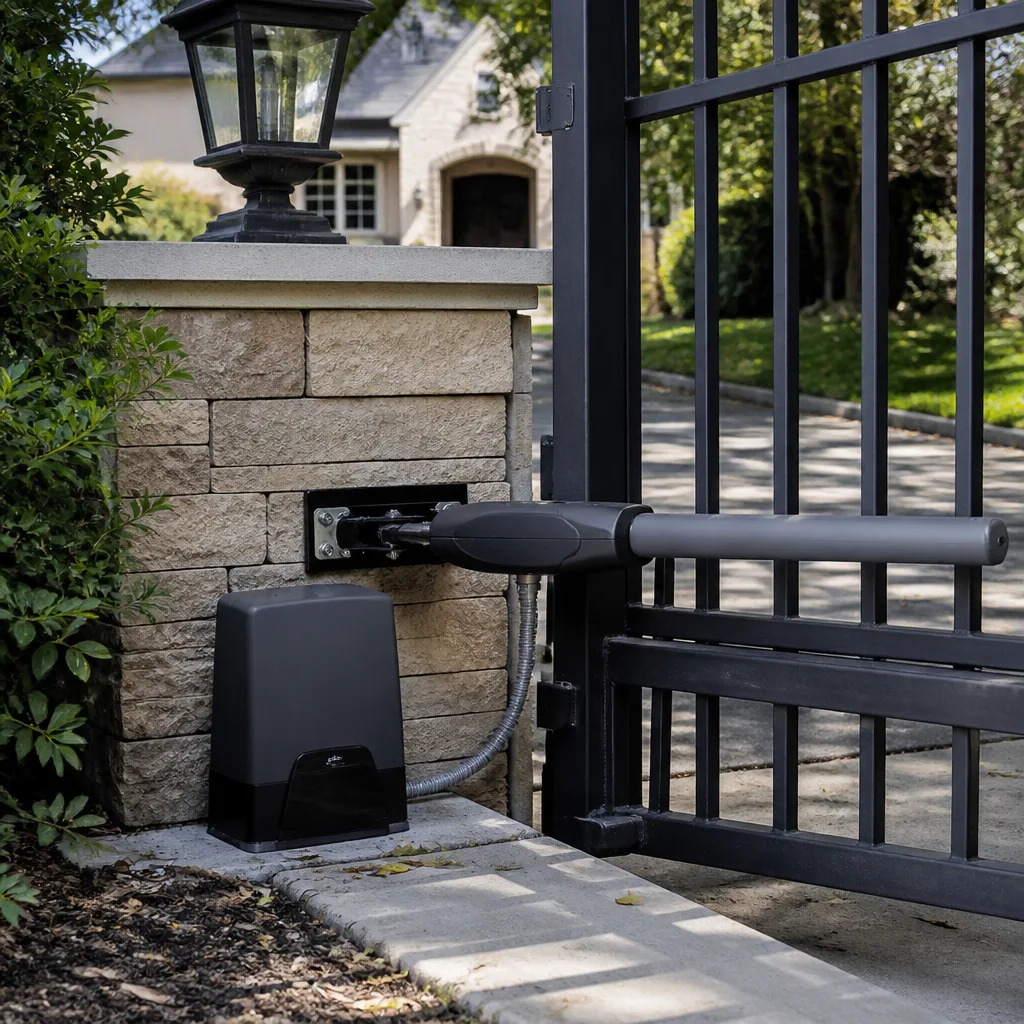
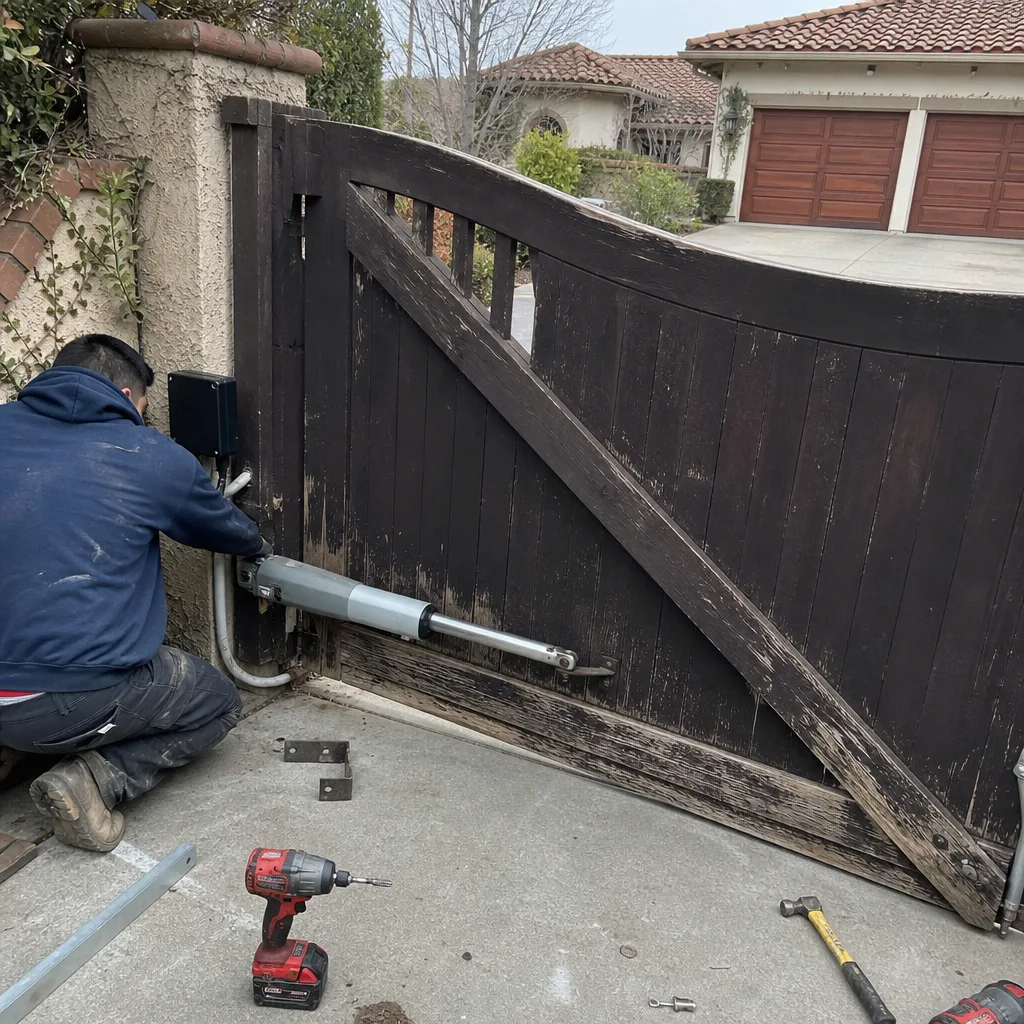 Before
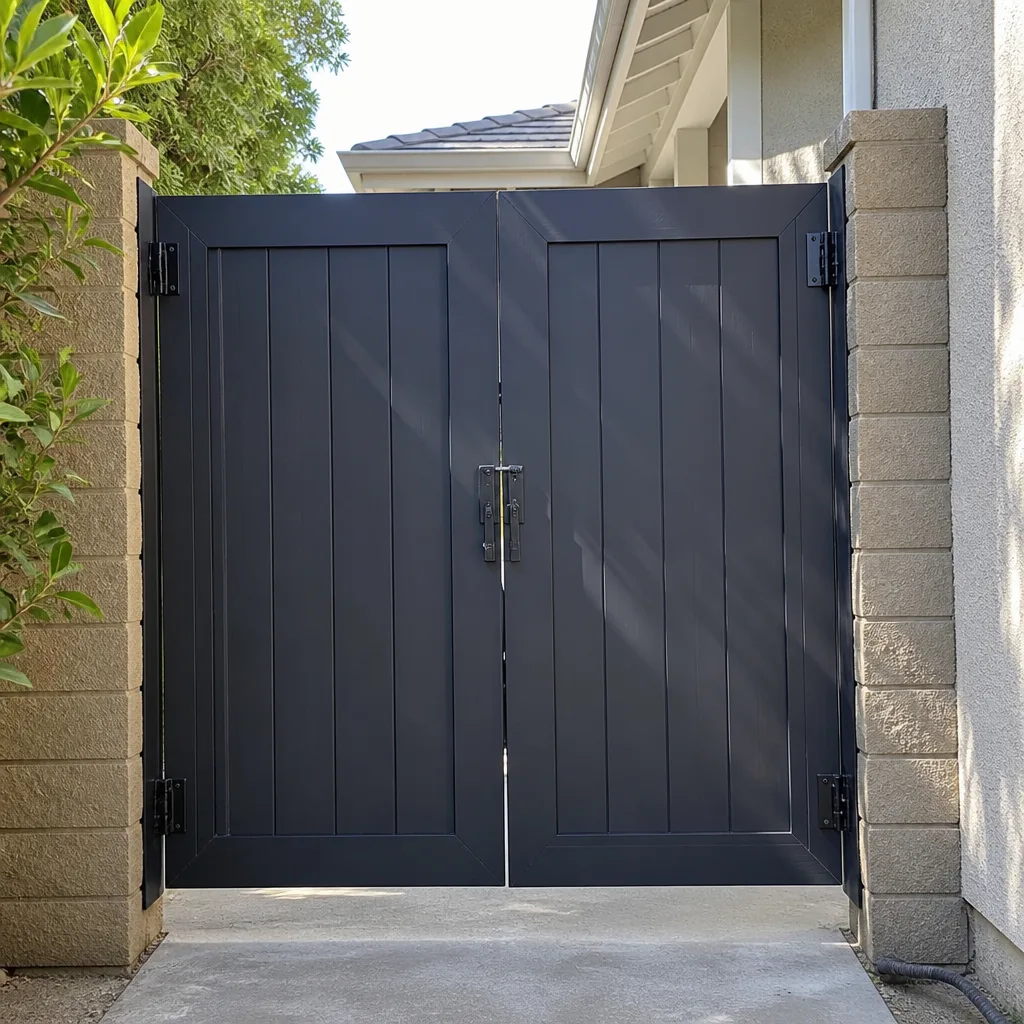 After
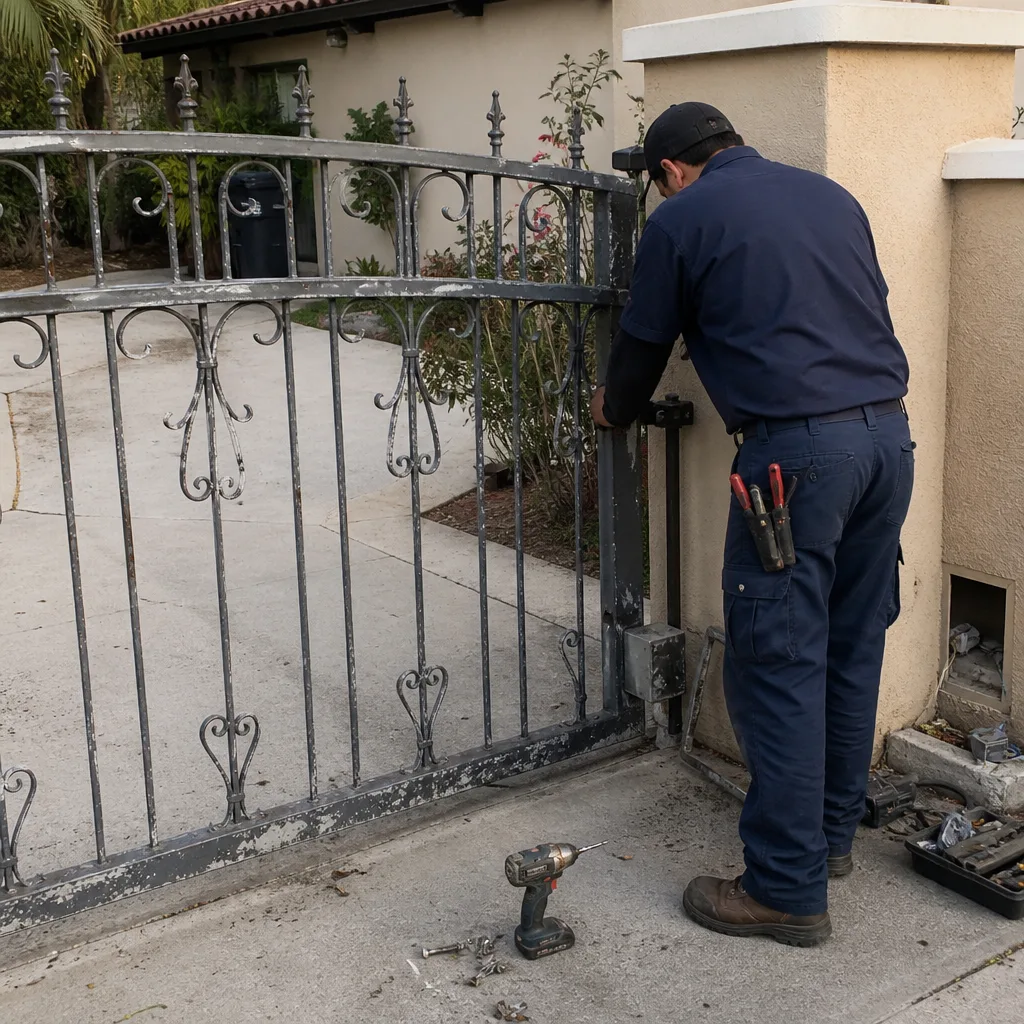 Before
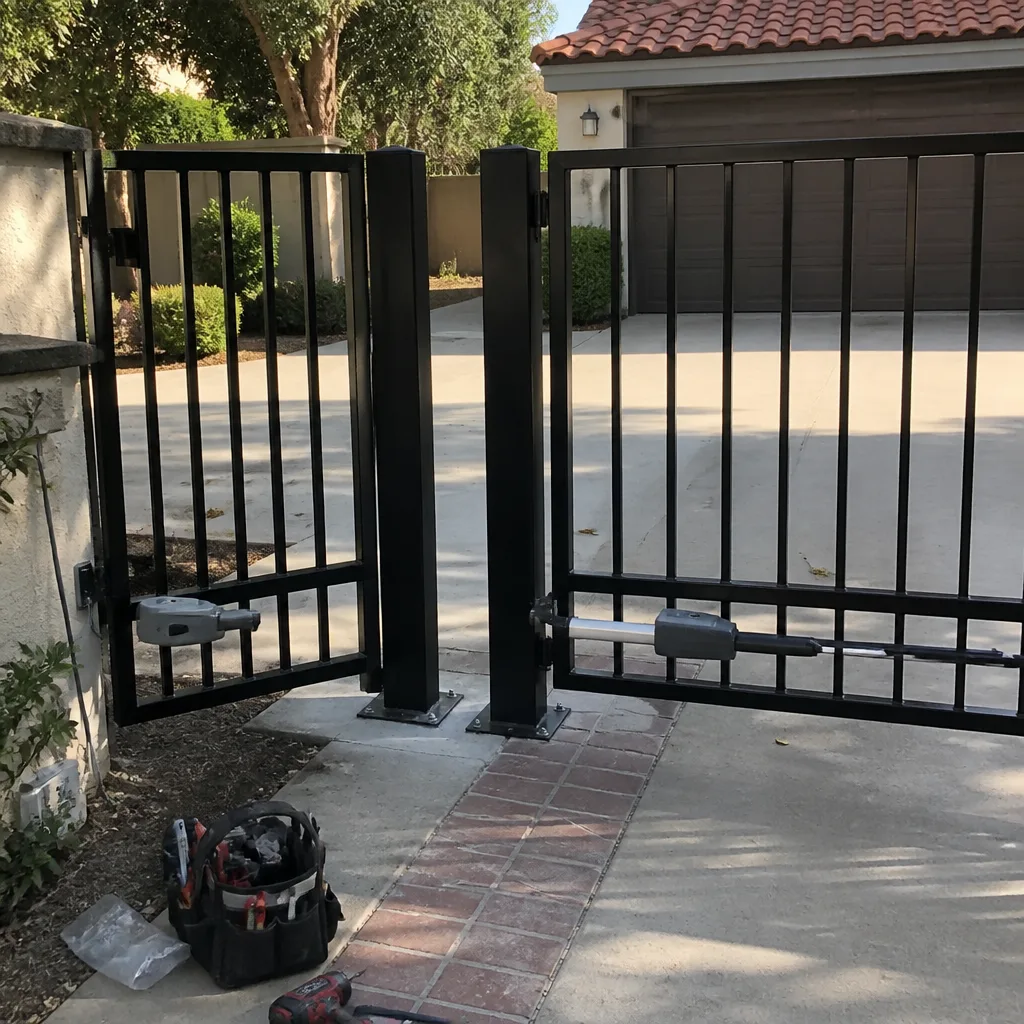 After
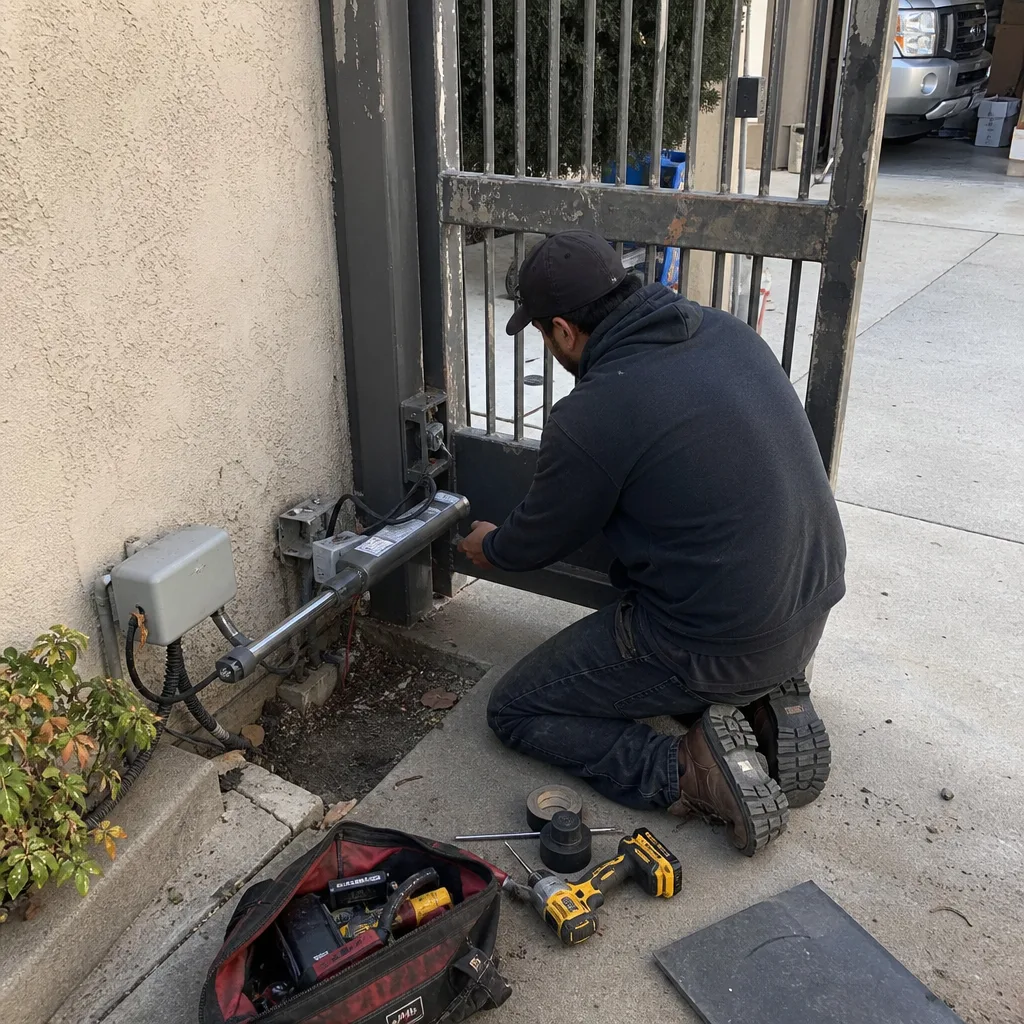 Before
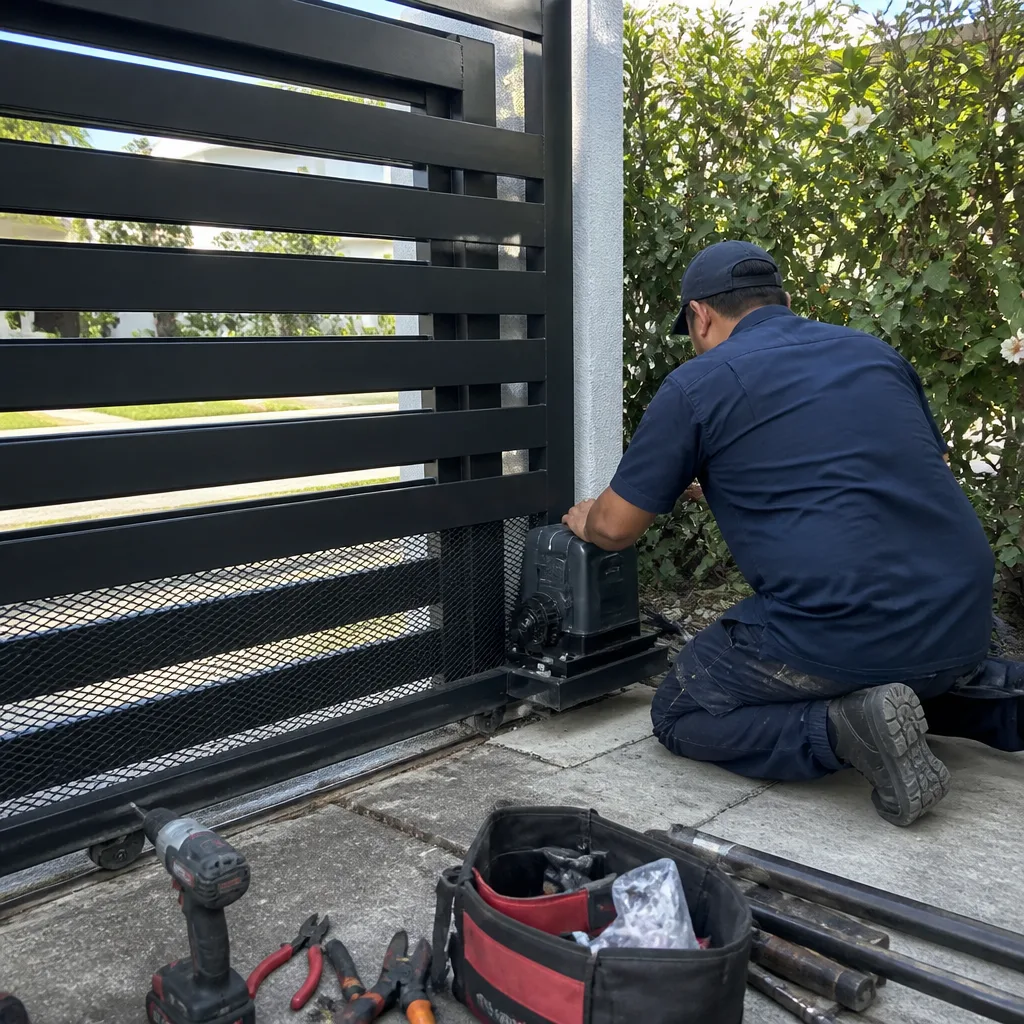 After
DIY vs Professional Gate Repair: The Irvine Homeowner’s Decision Guide
Most Irvine homeowners don’t think about their driveway gate until it stops moving. Then it’s 7:15 on a Tuesday morning, the car is trapped in the driveway, and someone is late for work. Here’s the counterintuitive part: the gate didn’t fail that morning. It had been telling you for months, a slower open here, a grinding sound there, a sag you noticed but rationalized away. This guide walks through which gate problems an Irvine homeowner can reasonably handle with a wrench and a Saturday afternoon, and which ones need a trained technician with commercial-grade equipment. By the end, you’ll know exactly where the line sits, and why getting it wrong costs more than the service call ever would.
Quick Answer
For most Irvine homeowners, the honest answer is this: simple maintenance like lubricating hinges, tightening bolts, and cleaning photo-eye sensors is safe DIY territory. Anything involving torsion springs, gate motors, circuit boards, or a gate that has come off its track is professional work. The repair itself usually costs $150 to $450 when caught early, and waiting until the gate fails completely can push that past $1,200. At Ironworks Gate Co., we’ve watched a $38 hinge replacement become a $900 track rebuild because the sag was ignored for a season.
Table of Contents
- What DIY Gate Repair Actually Costs in Irvine
- What’s Safe to Fix Yourself: 5 Jobs an Irvine Homeowner Can Handle
- The Dangerous List: What to Never Attempt on Your Own
- Gate Motor and Opener Repair: The Honest Reality
- How Irvine’s Climate and Soil Affect Gate Wear
- Irvine Building Codes and HOA Rules for Gate Work
- Common Mistakes to Avoid
- When to Call a Professional
- Frequently Asked Questions
- The Bottom Line
What DIY Gate Repair Actually Costs in Irvine
The sticker price of a DIY gate repair looks appealing until you add up the full ledger. A homeowner in Turtle Ridge who tries to replace a gate wheel on a cantilever gate might spend $60 on the wheel, $40 on a jack, and four hours of a Saturday. Then the gate binds because the wheel wasn’t shimmed to the track correctly, and the $200 professional repair becomes a $400 track adjustment. That’s the pattern we see across Irvine: the parts are cheap, the knowledge is what you’re actually paying for.
Here’s what Irvine homeowners typically spend on common DIY attempts versus what the same repair costs when done professionally the first time:
- Hinge lubrication and bolt tightening: $15 DIY vs. $89 professional tune-up (our seasonal rate).
- Photo-eye sensor cleaning or realignment: $0 DIY vs. $90-$140 professional if it needs new brackets.
- Gate wheel replacement on a cantilever gate: $60-$100 DIY vs. $180-$260 professional, including track inspection.
- Torsion spring replacement: not recommended DIY under any circumstance; $280-$450 professional.
- Control board replacement: $150-$400 DIY if you can source the part and diagnose the fault, vs. $280-$600 professional with brand-compatible equipment and warranty.
The real cost of DIY is the second repair. When a homeowner opens the panel, replaces a part by trial and error, and the gate still doesn’t work, the professional now has to undo the work first. In our experience, about a third of the calls we take in Irvine start with “I tried to fix it myself and now it’s worse.” That’s not a judgement. It’s just how these machines work.
What’s Safe to Fix Yourself: 5 Jobs an Irvine Homeowner Can Handle
Some gate maintenance genuinely is homeowner work. We tell our Irvine customers this directly, because the ones who handle these five jobs well extend the life of their gate by years and call us less often for avoidable failures. Here’s the list, in order of what we recommend most:
- Lubricating hinges and rollers every six months. Use a white lithium grease on metal-to-metal contact points and a silicone spray on rollers. Wipe off excess. This is the single highest-value maintenance task for Irvine’s dry climate, which causes grease to break down faster than in coastal areas.
- Tightening visible bolts and lag screws. Walk the gate monthly with a socket set. Check hinge bolts, post caps, and any bracket you can see. A loose hinge bolt on a 400-pound gate gets worse fast.
- Cleaning photo-eye sensors. The little round lenses near the bottom of the gate posts get dusty in Irvine’s wind. A dry cloth and a quick realignment, if you see a blinking light, often restores proper safety function.
- Trimming vegetation away from the gate path. Overhanging branches and creeping ground cover interfere with sensors and track rollers. Keep a clear path of at least six inches on both sides of the gate.
- Checking the gate’s manual release mechanism. Every automated gate has a manual disconnect, usually a lever or key. Test it quarterly so you know how to open the gate during a power outage. This requires no tools and takes thirty seconds.
If you do these five things, your gate will outlast most of your neighbors’. The problems that remain are the ones that need professional attention, and that’s where the next section draws the line.
The Dangerous List: What to Never Attempt on Your Own
There’s a specific set of gate components where a wrong move can injure you, damage the gate, or both. None of these are DIY jobs, and we’re not being protective of our business when we say that. We’re being honest about physics. A residential slide gate can weigh 400 to 1,000 pounds. A swing gate carries the same weight on a much smaller hinge surface. When a component under that kind of load fails, the energy release is sudden and unforgiving.
Torsion springs and tension springs. These are the most dangerous parts of any gate system. A torsion spring under load stores enough energy to break bones or worse if it releases unexpectedly. Even when the gate is in the open position, residual tension can remain. Never attempt to adjust, remove, or replace these. This is the number one cause of serious gate-related injuries in residential settings.
Gate motor and gearbox internals. The motor itself isn’t the danger. The capacitors inside the control box are. They store charge even after power is disconnected and can deliver a painful, potentially dangerous shock. A trained technician knows how to discharge these safely before working on the board or motor.
Welding and structural repairs. A cracked gate frame or broken hinge weld needs more than a flux-core welder from the hardware store. The weld has to be penetrated correctly, ground smooth, and often reinforced with a gusset plate. A poor weld on a gate that cycles hundreds of times a week will fail catastrophically, and typically at the worst possible moment.
Any gate that has come off its track or fallen off its hinges. If the gate is on the ground, the job isn’t “putting it back.” It’s figuring out why it fell, what bent on the way down, and whether the supporting structure is still sound. That requires lifting equipment, measuring tools, and experience reading metal fatigue.
The rule is simple: if the repair requires lifting the gate off its supports, opening a motor housing, or touching a spring, call a professional. The $89 seasonal tune-up we offer in Irvine exists precisely so small problems get caught before they become the dangerous list.
Gate Motor and Opener Repair: The Honest Reality
Gate motors fail in predictable ways, and diagnosing them correctly on the first try is the difference between a $200 repair and a $700 parts cannon. Here’s what we’ve learned across thousands of Irvine gate service calls: most motor problems are not the motor. They’re the components around it. Photo-eye misalignment. A corroded limit switch. A dead capacitor. A control board that’s been fried by a power surge.
When a homeowner opens the motor housing, the typical sequence goes like this: the motor hums but doesn’t turn, so the homeowner assumes the motor is bad and orders a replacement for $300. The new motor arrives, gets installed over a weekend, and the gate still doesn’t move. Now it’s Monday, the gate is disassembled in the driveway, and the real problem was a $25 capacitor or a $40 limit switch that the homeowner never tested.
We are factory-trained on nine gate automation brands, including FAAC, BFT, Linear, and Viking equipment that’s common in Irvine’s older estate neighborhoods. That matters because each brand has its own diagnostic procedure, its own failure patterns, and its own quirks. A BFT board failure looks different from a FAAC fault code, and the fix is different too. A generalist handyman who “works on gates” among other things may not know the difference, and the trial-and-error cycle that follows gets billed to you either way.
The honest reality about gate motor repair is this: unless you own a multimeter, know how to read a wiring diagram, and have the patience to test components systematically, you’re not repairing the motor. You’re guessing. And with control boards running $150 to $500 for most brands, guessing gets expensive quickly.
How Irvine’s Climate and Soil Affect Gate Wear
Irvine sits in a unique spot on the Southern California map. We’re close enough to the coast to get marine layer mornings and dry, hot afternoons, but far enough inland that summer temperatures routinely hit the 90s. That temperature swing, combined with low annual rainfall and alkaline soil, creates a specific set of gate problems that homeowners in other cities don’t face.
The dry heat accelerates grease breakdown. Hinges and rollers that would stay lubricated for a year in a more humid climate go dry in Irvine within six months. When metal runs dry against metal, the wear compounds. A homeowner in Woodbridge or Northwood who skips lubrication will hear grinding noises by late summer, and those sounds are the hinge wearing itself down.
Irvine’s soil also plays a role, particularly in neighborhoods built on former agricultural land where the soil shifts seasonally. Gate posts set in concrete can move a fraction of an inch as the ground expands and contracts with moisture changes. That small movement throws swing gates out of alignment and causes slide gates to drag on their tracks. A post that moved a quarter inch in a year will move more the next year if not corrected.
We also see salt corrosion on gates within a few miles of the coast, and Irvine’s eastern neighborhoods get enough wind to drive fine dust into motor housings and keypads. The dust accumulates on circuit boards and acts as an insulator, causing overheating in the summer. An annual cleaning of the control box internals is one of the most effective preventive measures for Irvine gate owners, and it’s part of our $89 seasonal tune-up.
Irvine Building Codes and HOA Rules for Gate Work
Irvine is a master-planned city, which means most residential gates fall under a web of rules that go beyond basic California building code. Before any gate repair or replacement that involves structural changes, electrical work, or modifications to the gate’s footprint, homeowners may need to navigate city permitting requirements and HOA design review. This is one area where the professional advantage is clearest: a gate company working in Irvine every week knows which jobs trigger permits and which don’t.
Basic repair work, like replacing a hinge, a wheel, or a control board, typically doesn’t require a permit. Replacing an entire gate or moving a gate post does. In some Irvine villages with stringent HOA design guidelines, even a visible change like a new gate style or a different color can require architectural committee approval before work begins. The HOA review process can add two to six weeks to a project timeline, and homeowners who skip this step can face fines or be ordered to restore the original gate.
Electrical work on gate automation systems must be done to current code standards, including proper conduit, grounding, and GFCI protection where applicable. If the power run to the gate predates current code, as it does in many Irvine homes built in the 1970s and 1980s, a gate motor replacement may need an accompanying electrical upgrade. We handle this regularly in neighborhoods like University Park and the Ranch, where the original gate systems are now 40 years old and the wiring wasn’t designed for modern automation.
The short version: if the repair is mechanical and confined to the existing gate, it’s usually straightforward. If it involves the electrical supply, the gate structure, or the visual appearance, check with the city and your HOA first. Or call us and we’ll tell you what applies to your specific street, because after 42 years in this region, we’ve probably already done the same job three blocks from your house.
Common Mistakes to Avoid
- Ignoring slow operation. A gate that opens slower than it did last year is telling you something. In Irvine’s dry climate, it usually means dry bearings or a motor working too hard. Waiting until it stops completely turns a $150 fix into a $900 replacement.
- Using the wrong lubricant. WD-40 is a solvent, not a lubricant. It cleans and then evaporates, leaving metal drier than before. Use white lithium grease on hinges and silicone spray on rollers and tracks. This mistake alone keeps gate repair companies busy across Orange County.
- Forcing a gate that’s stuck. When a gate binds mid-travel, the instinct is to push harder or cycle the motor repeatedly. That force bends brackets, strips gears, and burns out motors. Stop, disconnect the operator, and inspect for the obstruction before applying any force.
- Skipping the photo-eye test. Irvine safety standards require functional photo-eye sensors, which reverse the gate when something crosses the beam. If you don’t test these monthly, you won’t know they failed until the gate hits something.
- Replacing parts without diagnosing the root cause. A burned-out motor is rarely the root cause. Something made that motor work too hard: a misaligned gate, a failed bearing, an obstruction. Replace the motor without fixing the cause and you’ll replace the motor again within a year.
- Buying the cheapest replacement part available. Off-brand control boards and generic remotes from online marketplaces often lack the safety certifications required for residential gate operation in Irvine. They fail faster and can void the warranty on the rest of the system.
- Not testing the manual release before an emergency. Every Irvine homeowner with an automated gate should be able to open it manually in a power outage. If you’ve never located the manual release or tested it, the next blackout will be a bad time to learn.
When to Call a Professional
Call a professional the moment you see a sag in the gate, hear grinding, or notice the motor straining. These are early warning signs, and they’re cheap to fix early and expensive to fix late. Call when the gate won’t stay on its track, when the motor hums but doesn’t move, or when the gate reverses halfway through its cycle for no apparent reason. Call when you’ve already tried a DIY fix and the problem persists or got worse. And call before you buy a replacement gate, because the most expensive mistake we see in Irvine is a homeowner who spent $4,000 on a new gate installed on old, failing posts and hardware. Ironworks Gate Co. offers free estimates in Irvine, and we’ll tell you honestly if the job is simple enough to handle yourself. Reach us at (213) 566-7552.
Frequently Asked Questions
Most gate repairs in Irvine run between $150 and $450, with simple fixes like hinge replacements or sensor realignments at the low end and motor or control board replacements at the high end. Full gate replacement typically starts around $2,500 and goes up based on size, material, and automation. Call (213) 566-7552 for an exact quote, always agreed upon before any work starts.
A homeowner can physically swap a gate motor, but the process requires electrical knowledge, brand-specific programming, and often a permit in Irvine. Mistakes risk damaging the new motor, voiding the warranty, or creating a safety hazard. Most of our customers find that the professional installation cost is less than the risk and frustration of doing it twice.
We service nine major brands, including FAAC, BFT, Linear, and Viking systems common in Irvine. Our technicians are factory-trained on each brand’s diagnostic procedures, so the correct fix is identified on the first visit rather than through trial and error. If your gate has a nameplate with the brand on it, we can service it.
Our $89 seasonal tune-up in Irvine covers lubrication of all moving parts, bolt and bracket tightening, photo-eye cleaning and alignment, motor and gearbox inspection, limit switch testing, and a full safety function check. It’s the cheapest insurance against the $900 failures that develop when small problems go unaddressed.
Most common repairs, including hinge replacements, wheel swaps, sensor fixes, and control board replacements, are completed in a single visit of one to three hours. More involved jobs like track rebuilds or full gate installations are scheduled in advance with a clear timeline provided before work begins.
Damage caused by a covered event, such as a vehicle impact or a fallen tree, is usually covered by your Irvine homeowners policy, subject to your deductible. Ordinary wear and tear is not covered. If you’re filing a claim, we can provide a detailed written estimate that insurance adjusters accept without pushback. Call (213) 566-7552 to discuss your situation.
Yes, gate electrical work is part of the job, from the power run to the control board to the keypad and remote receivers. We handle the full scope so you don’t need to coordinate an electrician and a gate company. All work is done to current Orange County code, and we’re familiar with Irvine’s specific permitting requirements.
The Bottom Line
Your driveway gate is a machine, and like any machine, it responds to maintenance and punishes neglect. The homeowner jobs are simple: lubricate, tighten, clean, and observe. The professional jobs are everything else. What separates a good outcome from an expensive lesson is knowing which side of the line you’re on before you start. We’ve spent 42 years fixing gates across Irvine, and we’d rather tell you a repair is simple enough to do yourself than bill you for an hour of work you didn’t need. When you do need us, we’ll be here. The price is quoted before we start, the work is guaranteed in writing through our Done Right Promise, and a live person answers the phone at (213) 566-7552, any hour, any day. Visit the Ironworks Gate Co. home page to learn more about our full range of gate services, standing offers, and coverage area.
Written by the team at Ironworks Gate Co.